The Alfred Russel Wallace Award
For outstanding Doctoral Research in Entomology
About the Award
The Alfred Russel Wallace Award recognises exceptional doctoral research that has made a significant contribution to the science of entomology.
Named after Alfred Russel Wallace, this award highlights excellence in doctoral research and supports early career researchers at a critical stage of their professional development.
The award celebrates postgraduates whose PhD research demonstrates originality, rigour, and lasting scientific impact, providing recipients with a national platform to showcase their work and engage with the wider entomological community.
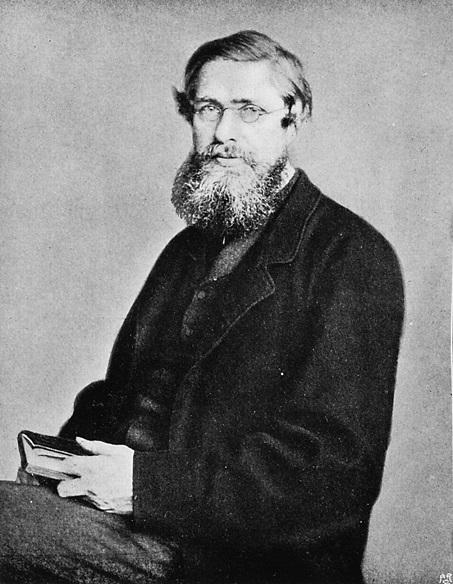 Alfred Russel Wallace OM FRS – President of the Society (1870-71)
Alfred Russel Wallace Award at a Glance
First prize | – £400, Certificate, and one year of free RES membership
– Presentation at a major Society meeting
– Publication of an article in Antenna |
Runners-up | Up to four runners-up will have their names and abstracts published in Antenna and/or on the RES website. |
| Eligibility | All post-graduates who have been awarded a PhD or DPhil in the last two years on the basis of a thesis written in the English language. |
| Deadline | The closing date for entry will be announced when the award opens for entries. It will be towards the end of 2026. |
| Decision | The judging panel consists of senior Fellows of the Royal Entomological Society. |
| Entry | The candidate’s supervisor or external examiner should complete the entry form below including a copy of the abstract of the thesis. Please do not send the thesis itself until requested to do so. |
Application Guidance
Please read the information below carefully before applying for this award, paying particular attention to the assessment criteria.
Eligibility
This award is open to:
- Researchers who have been awarded a PhD
- Candidates whose thesis was written in English
- Graduates awarded their degree between 1 October 2022 and 31 December 2025
- Nominations must be submitted by a supervisor or external examiner.
How to Nominate
Nominations must be submitted by the candidate’s supervisor or external examiner.
Submissions must include:
The thesis itself should not be submitted unless requested.
Shortlisted candidates will be asked to:
- Submit a 500-word lay summary
- Deliver a 20-minute presentation
- Participate in a 20-minute Q&A session
Finalists may attend in person (UK travel funded) or virtually.
Assessment Criteria
Strong nominations will demonstrate:
- Original and high-quality doctoral research
- Significant contribution to entomological science
- Scientific rigour and clarity
- Evidence of scholarly impact
Prize and Recognition
The winner receives:
- One year of free RES membership
- Opportunity to present at a major Society meeting
- Publication opportunity in Antenna
Runners-up receive recognition through RES publications.
Key Dates
Award open: 2026 – exact date tbc
Deadline: tbc.
Assessment Process
Nominations are assessed by a panel of senior Fellows.
Following document review, shortlisted candidates are interviewed and assessed through presentations.
The judges’ decision is final.
Nominate someone for the Alfred Russel Wallace Award

About Alfred Russel Wallace
Wallace was a President of RES in the 1870s and a highly respected contemporary of Darwin. For more information about his life and work, see the Alfred Russel Wallace website
“there is no more admirable character in the history of science.”
Sir David Attenborough, 2011
Successful Recipients
| Year | Winner name | Publication title |
|---|
| 2025 | Corentin Jouault | Biotic interactions and paleoevents: their impact on the diversification of Insecta |
| 2025 | Charlotte Julie Wright (runner up) | Chromosome evolution in Lepidoptera |
| 2024 | Jan Kreider | Phenotypic plasticity and social evolution. |
| 2024 | Manish Kumar Pathak
(runner-up) |
Ant’s Solution to Some Nature Inspired Problems. |
| 2023 | Hollister Herhold | Tracheae and Hemoglobins: A Comparative Study of Morphological and Molecular Adaptations for Respiration in Insects. |
| 2023 | Jamie Weir
(runner-up) |
Buffering and trophic mismatch in spring-feeding forest caterpillars. |
| 2023 | Max Tercel
(runner-up) |
The trophic ecology of non-native ants on Round Island, Mauritius. |
| 2022 | Arun Prakash | Immune Regulation Of Disease Tolerance And Immune Priming In Drosophila. |
| 2021 | Kelly Jowett | Carabids for Natural-Enemy Pest Control: combining ecology and knowledge exchange to bridge the gaps. |
| 2020 | Jordan Cuff | Nutrient-specific Foraging and the Role of Spiders as Biocontrol Agents. |
| 2019 | Dr Jesamine Bartlett | Ecophysiology & ecological impacts of Eretmoptera murphy. |
| 2018 | Dr Patrick Rohner | An Integrative Study of Patterns and Processes Driving Sexual Dimorphism and Life-History Evolution in Diptera and Other Insects. |
| 2017 | Dr Callum J. Macgregor | The role of moths as pollinators, and the effects of environmental change. |
| 2016 | Dr Rebijith Kayattukandy Balan | Molecular approaches in identification, diversity and management of important insect vectors, Thrips palmi Karay (Thysanoptera) and Aphis gossypi Glover (Hemptera). |
Have you received a RES Award or Grant?
