The RES Award for Student Science Communication
For Outstanding Public Communication of Entomological Science
Enter our writing competition for students.
The RES Award for Student Science Communication recognises students who communicate entomological science clearly, creatively, and engagingly to non-specialist audiences.
Through an annual writing competition, the award celebrates accessible, high-quality science communication and supports students in developing their public engagement skills.
This award supports the Society’s commitment to improving public understanding of entomology.
By encouraging students to write for general audiences, the competition helps develop skills in clarity, storytelling, and responsible science communication.
Applications will reopen on Monday 22 June 2026.
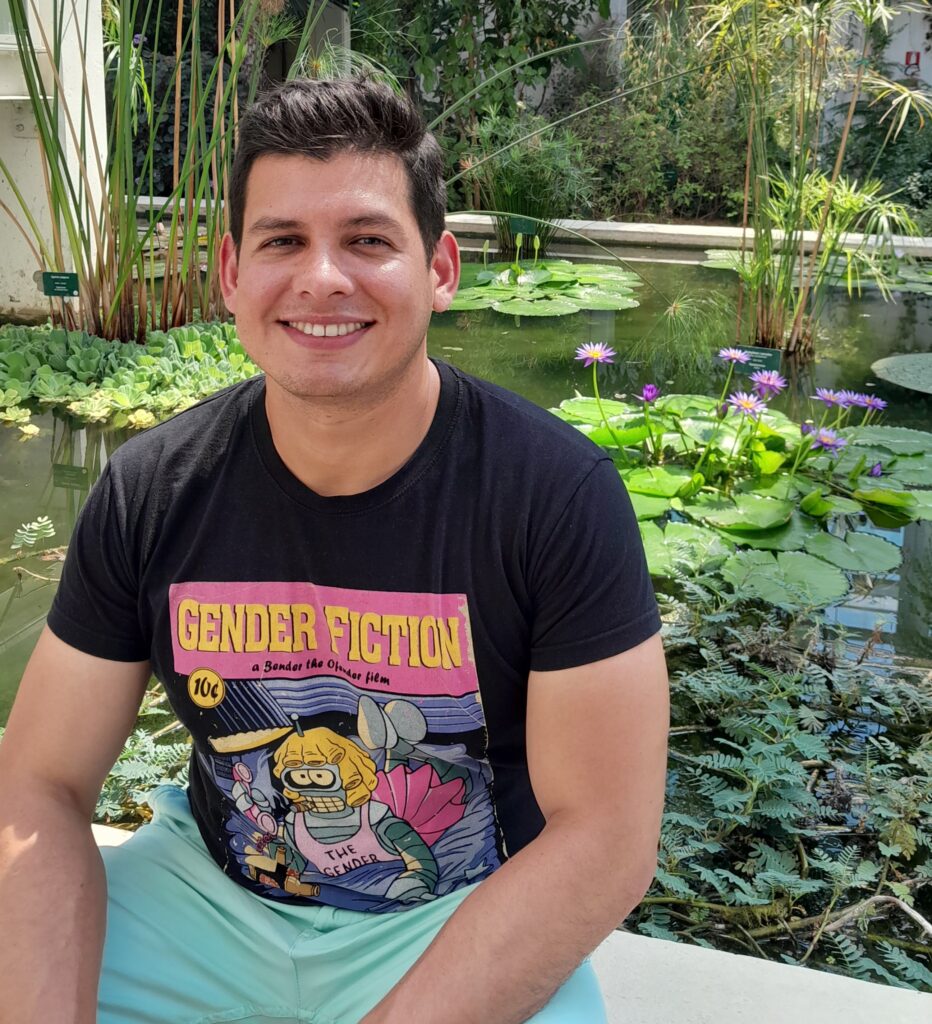 Juan Carlos Cambronero-Heinrichs, winner of the RES Award for Student Science Communication 2023
Student Science Communication Award at a Glance
| Prize | Winner £400, runner up £300, both articles published in ‘Antenna’.
Certificate
Free RES membership for one year |
| Article | Any article about an entomological topic that would be of interest to the general public. The article should be easy to read, in a popular style and no longer than 800 words (not including any reference list). |
| Eligibility | Undergraduates and postgraduates on both full and part-time study, anywhere in the world. |
| Deadline | 31 December 2026 |
| Cycle | Annual, entries accepted until 31st December, winner/s announced early in the following year. |
| Decision body | Judging Panel drawn from Fellows of the Society |
Application Guidance
Please read the information below carefully before applying for this award, paying particular attention to the assessment criteria.
Eligibility
This award is open to:
- Full-time and part-time learners
Applicants may be based anywhere in the world.
RES membership is not required.
Self-nominations are permitted.
Award Criteria
Strong submissions will demonstrate:
- Clear and engaging writing style
- Accuracy and scientific integrity
- Accessibility for non-specialist readers
- Originality and relevance of topic
Articles must:
- Focus on an entomological topic
- Be of interest to the general public
- Be no longer than 800 words (excluding references)
- Be written in a popular, accessible style
Applicants are encouraged to ensure that submissions are accessible, accurate, and engaging for non-specialist audiences.
Prize and Recognition
Winners receive:
- One year of free RES membership (winner)
Recipients gain visibility through Society communications.
How to Apply
Submissions must be sent by email to:
info@royensoc.co.uk
Entries must include:
- Essay in Microsoft Word or PDF format
- Applicant’s name and email address
- Academic institution details, including address
Self-submitted entries are accepted.
Key Dates
Applications open: 22 June 2026
Deadline: 31 December 2026
Assessment Process
Submissions are assessed by a panel of Fellows of the Society.
Entries are reviewed for clarity, originality, and relevance.
All decisions are final.

2025 winners
1st Prize – Amy Fleming, Harper Adams University, UK. “Snout & About, Your bite sized travel guide to desinations in the UK“.
2nd Prize – Amalia Herrera Grau, Harper Adams University, UK. “The Search for Splendid“.
Commended – Xiaoyu Chen, Imperial College London, UK. “Stressed Ants“.
Commended – Beatrix Ward, Harper Adams University, UK, “Buried with care: a Coleopteran romance“.
2024 winners
1st Prize – Agustina Porrino, Consejo Nacional de Investigaciones Científicas y Técnicas, (CONICET) Argentina. “The fly’s flight through a behavioral ecologist eyes“.
2nd Prize – Leona Breen, Harper Adams University, UK. “Beetle Mania“.
2023 winners
1st Prize – Juan Carlos Cambronero-Heinrichs, University of Padua, Italy. “Reclaiming mariola‘s wings”
2nd Prize – Eric Jackson, Columbia University, United States. “A God on Six Legs“
3rd Prize – Altrim Mamuti, Columbia University, United States. “From Freedom to Boxes: A Journey Unchecked“
2022 winners
1st Prize – Duran Nanson, Harper Adams University. “Could the pygmy hog-sucking louse be the new mascot of conservation?“
2nd Prize – Alexander Wellington, Cardiff University. “Maggots: we deserve equal respect“
3rd Prize – Gaia Mortier, University of Reading. “To Flea or Not To Flea: The Curious History of Flea Circuses“
2021 winners
1st Prize – Leah Fitzpatrick, Oxford Brookes University. “British Press Association vs the Noble False Widow spider“
2nd Prize – Ashley Dear, Harper Adams University. “‘Bio’-Mimicry Is the Highest Form of Flattery“
3rd Prize – Amy Farrow, Harper Adams University. “Choose your own evolutionary pathway’ – a brief exploration of the evolution and diversity of four major insect orders“
2020 winners
1st Prize – Zeke Rowe, University of Bristol. “Fighting on a miniature front“
2nd Prize – Jennifer Newell, Harper Adams University. “Bug Business“
3rd Prize – Robin Hutchinson, University of Reading. “Work smarter, not harder: The parasitic plan of the cuckoo bumblebee queen“
2019 winners
1st Prize – Christina Conroy, University of Greenwich. “The ANTicipation for a trip which BLOWed“
2nd Prize – Amy Carter, Harper Adams University “The Long-Lost Tale of the Mother Earwig“
3rd Prize – Rebecca Sim Shu Yu, Royal Veterinary College “Mozzy’s Christmas Wishes“
2019 runners up
Three runners up were awarded:
2018 winners
1st Prize – Tara Sedgwick, Harper Adams University “Plenty of Insects“
2nd Prize – Abigail Enston, Harper Adams University “Zombie Antpocalypse“
3rd Prize – Faith Akinyi Obange, University of Nairobi “An unlikely ally: The greater waxmoth to the rescue…again?“
2018 runners up
Two runners up were awarded:
2017 winners
1st Prize – James Fage, Harper Adams University. “Toxic teamwork and the Müllerian mimicry mystery“
2nd Prize – Maggie Gill, Harper Adams University. “A sad day at the office“
3rd Prize – Rhiannon Dowling, Imperial College London. “1 Star Bee & Bee Review“
2017 runners up
Two runners up were awarded:
Have you received a RES Award or Grant?
