

Advances in Hemipteran Research 2026
29 October @ 10:00 – 30 October @ 17:00
Advances in Hemipteran Research 2026
Thursday 29 October – Friday 30 October 2026
Fund for Scientific Research (FNRS), Brussels, Belgium
The Royal Entomological Society has expanded its former Aphid Special Interest Group to cover all hemipterans and is delighted to be working with the Aphid Research Network BAPOA, supported by INRAE, the French National Research Institute for Agriculture, Food and Environment, on this joint event.
Too often, specialists work in isolation from others with whom they have much in common. All hemipterans have piercing mouthparts. Species from many families transmit plant viruses. On the other hand, they are hugely diverse. Some feed on plants, others on animals. They live on land, fresh water and even in the sea. Some are abundant pests, some are of conservation concern. Understanding commonalities and differences in terms of evolution, ecology, behaviour, physiology and systematics leads to improvements in practical outcomes.
Come and share your latest findings from the population to the molecular level and absorb those of others. Becoming more of a generalist can advance your specialism!
The call for abstracts and registration will be open in February 2026.

Conference dinner
Dinner at Le Roy d’Espagne for the evening of Thursday 29 October will be included in the conference price. This will comprise a three-course set menu and more information will be provided on registering.
Exhibition and Sponsorship
Join us in supporting our upcoming joint event! Connect with industry professionals, showcase your brand, and engage with an audience of approx. 150 delegates.
A range of sponsorship and exhibitor packages are available to suit different objectives and budgets, each offering valuable exposure and benefits. We are also happy to discuss bespoke packages tailored to your specific goals and needs.
Keynote speakers:
Prof. Thierry Hance, Université de Louvain-la-Neuve
Talk title: Demographics, sociality, behaviour and interactions: some evolutionary advantages of aphid populations
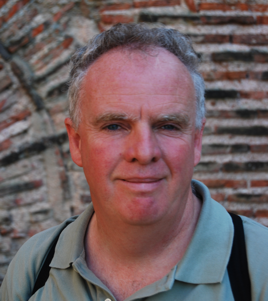
Thierry Hance’s laboratory
The Ecology of Interactions and Biological Control (EDIC) laboratory analyses multitrophic interactions between aphids (Aphididae), their parasitoids and the facultative symbiotic bacteria that give aphids complementary properties, as well as the viruses they can transmit to host plants. To gain the most comprehensive possible understanding of these interactions and their consequences, the team employs a variety of approaches, ranging from behavioural analysis to genome sequencing and the study of physiological aspects related to developmental temperatures. More recently, the influence of facultative endosymbionts of aphids, particularly cultivable strains of Serratia symbiotica, has been investigated. Circulation of the bacterium in the food web has been demonstrated, as has its role in defending aphids against parasitoids and modifying the behaviour of their hosts.
Biography
Thierry Hance is a trained biologist who specialises in ecology and population biology, particularly with regard to insects. He completed his PhD at UCLouvain, researching the role of predatory insect populations in protecting crops against aphids in agricultural areas. Following postdoctoral research into the adaptation of certain species to low temperatures at an Agriculture Canada research station, he was appointed a qualified researcher at the FNRS in Belgium in 1991. There, he developed research topics on the evolutionary relationships between plants and insects, and between hosts and parasitoids. Aphididae are at the centre of the models that I have studied in interaction with their parasitoids. Since becoming a professor at the Catholic University of Louvain in Louvain-la-Neuve in 1996, he has developed a research laboratory focusing on the ecology of interactions and biological control (EDIC). His research focuses on the ecology and population dynamics of insects and mites, some of which are of interest in agriculture. He has also developed practical biological control models for use in cereals, orchards, and greenhouses, with the aim of replacing pesticides. The expertise and technology developed in the EDIC laboratory has led to the establishment of a company specialising in producing insects for biological control purposes (www.viridaxis.com). He is currently focusing on the relationship between agriculture and biodiversity through European projects on the importance of landscape heterogeneity and crop management, including agroecological approaches.
Website: https://www.uclouvain.be/en/research-institutes/eli/eliv/team-hance
Prof. Saskia Hogenhout, John Innes Center
Talk title: Building resilience to insect-vectored plant pathogens
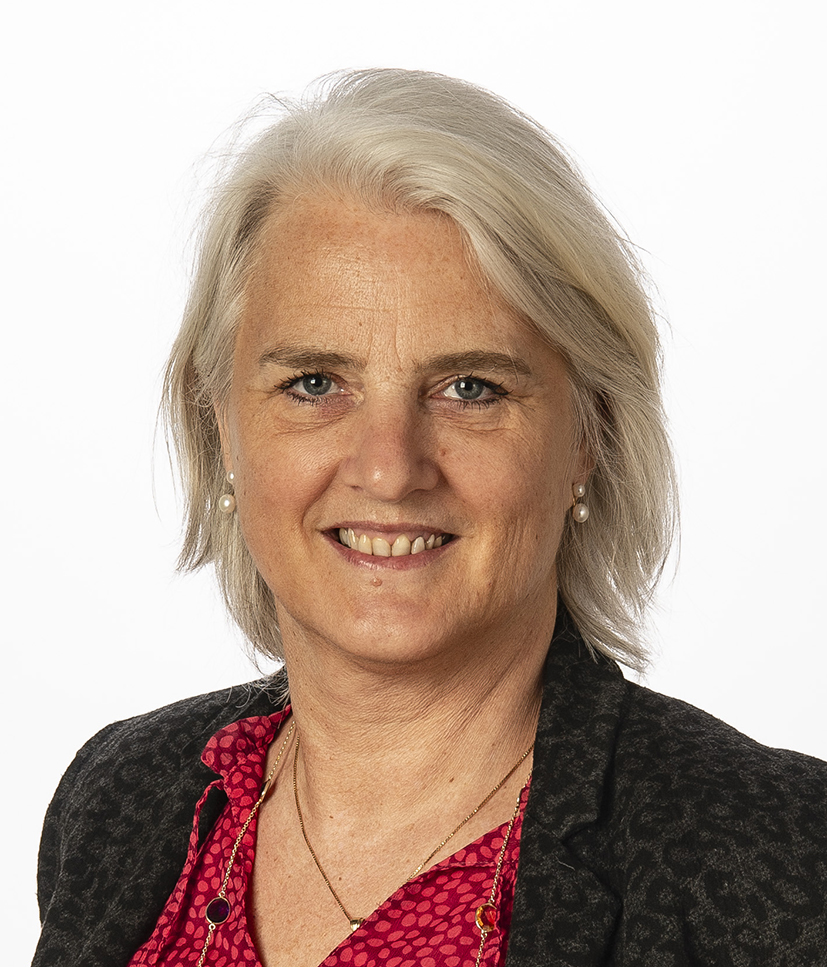
The Hogenhout Lab
The lab of Saskia Hogenhout investigates the molecular mechanisms underlying plant-microbe-insect interactions (MPMII), with two main research directions. One focuses on the virulence strategies of insect-transmitted phytoplasmas, specifically how their effector proteins reprogram plant development and suppress immunity to benefit both the pathogen and its insect vector. The second explores the biology of sap-feeding hemipteran insects—including aphids, leafhoppers, and froghoppers—by generating population genomics resources and studying how their salivary proteins manipulate plant processes to facilitate feeding and transmission.
Biography
Saskia A. Hogenhout received her BSc and MSc from Vrije Universiteit Amsterdam in 1994 and completed her PhD at Wageningen University in 1999. She began her independent career at The Ohio State University, where she was appointed Assistant Professor in 1999 and promoted to Associate Professor with tenure in 2005. In 2007, she relocated her lab to the John Innes Centre in the UK and became an Honorary Professor at the University of East Anglia in 2013. She was elected a Member of EMBO in 2023 and a Fellow of the Royal Society in 2024.
Website: https://www.jic.ac.uk/people/saskia-hogenhout/ Twitter: @SaskiaHogenhout
Dr Emmanuelle Jousselin, INRAE CBGP Montpellier
Talk title: Beyond Buchnera: the evolutionary consequences of symbiont turnover in Aphids

Biography
Emmanuelle Jousselin is a research scientist at CBGP, INRAE. Her research program focuses on understanding the evolutionary processes that structure interactions between phytophagous insects and their host plants, with a particular emphasis on aphids and their symbiotic bacteria. She combines molecular systematics, phylogenomic and macroevolutionary approaches to investigate host–symbiont coevolution, cospeciation, and the ecological and evolutionary drivers of symbiont turnover, which she has shown to be pivotal in aphid adaptation and diversification. Her recent work has focused on the phylogeny and the diversification of conifer-feeding aphids, and the evolutionary dynamics of nutritional symbionts in this group.