The Royal Entomological Society has unveiled the winners of its annual Photography Competition, showcasing a stunning series of close-up images that reveal the hidden beauty and fascinating lives of insects. From intricate macro portraits to dynamic moments captured in the wild, the winning photographs offer a rare glimpse into miniature worlds.
Run by the UK’s leading insect science charity, the annual competition celebrates the growing community of amateur insect photographers. The Royal Entomological Society’s Photography Competition 2025 drew over 3000 entries received from around the world, the largest ever number of entries ever compiled by the Society with photos taken in more than 110 different counties, highlighting both the rising popularity of macro photography and a shared passion for exploring nature through the lens.
Over 18 Winner
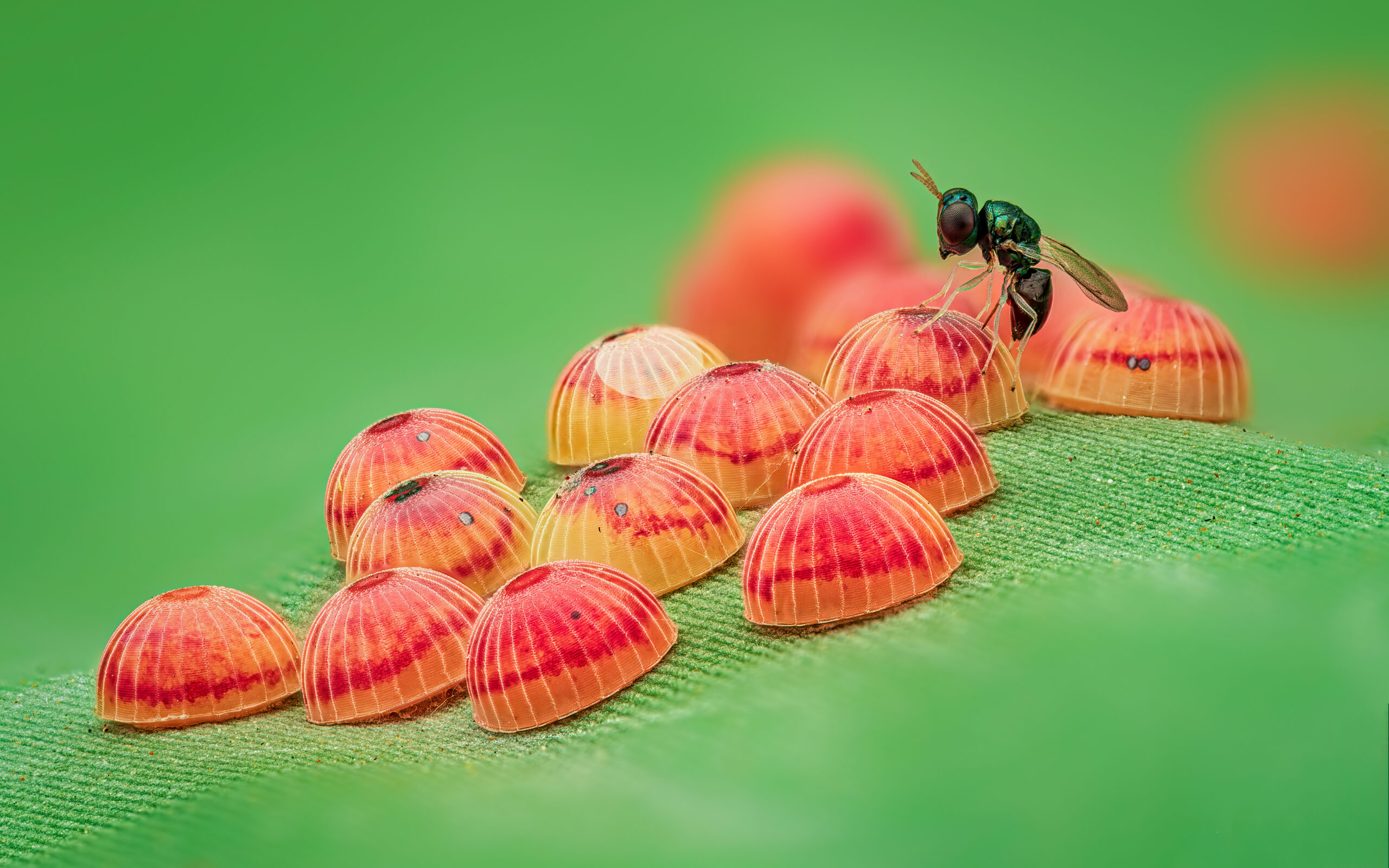 Parasitic Play
The overall winner in the ’18 and over’ category is Raghuram Annadana (Instagram: @macro_by_raghu) for his photo ‘Parasitic Play’ showing the eggs of a Banana Skipper butterfly (Erionota thrax) taken in India. He captured a parasitic wasp in the act of laying its own eggs inside the butterfly eggs.
“I spotted Banana Skipper eggs on a banana leaf while out on a macro walk. Through the lens, the scene turned dramatic – a tiny parasitic wasp was laying its eggs inside the butterfly eggs.
to give a sense of its size, each butterfly egg is just 1.8mm and the wasp is even tinier.”
– Raghuram on taking the winning photo.
Under 18 Winner
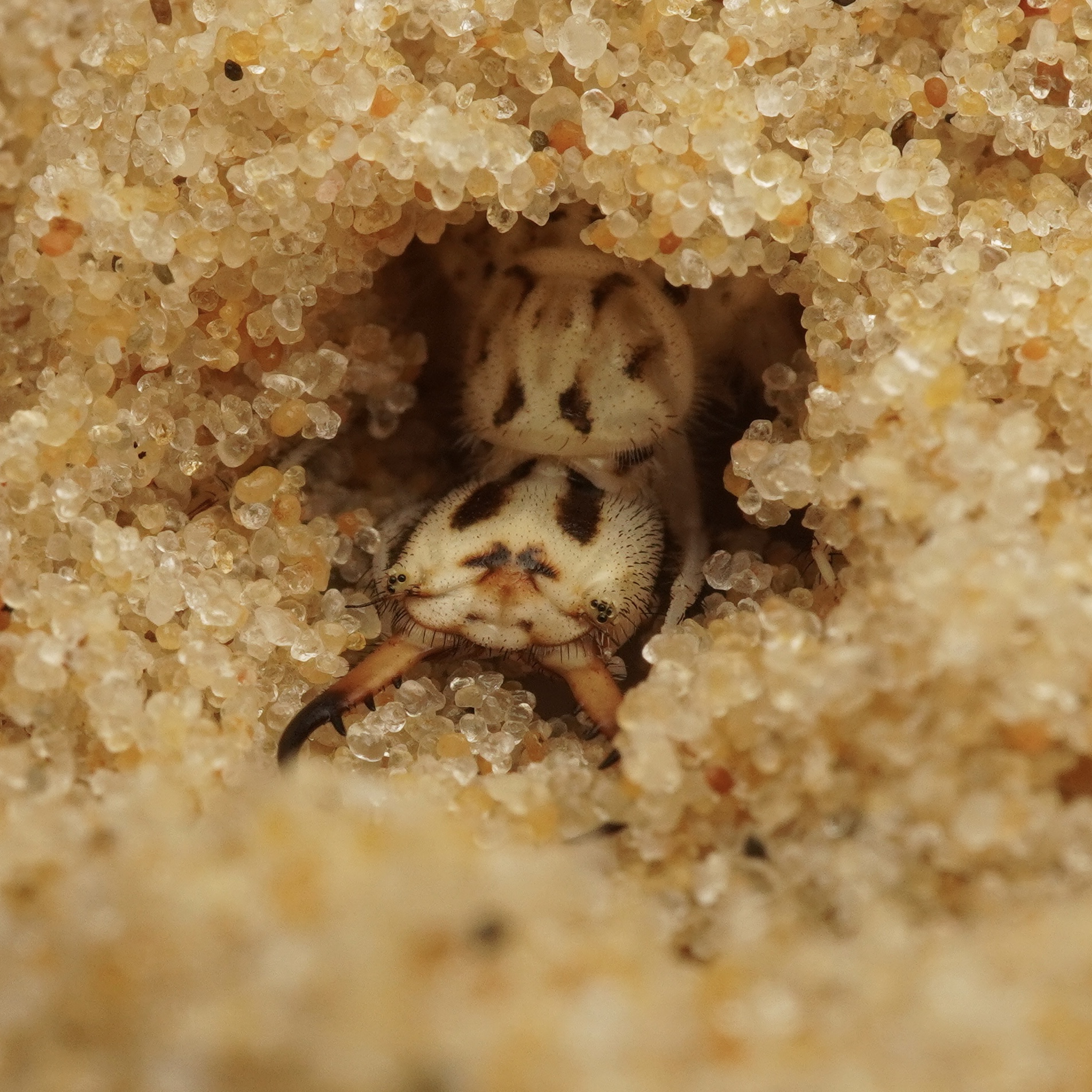 Tyrant of the Dunes
The overall winner of the ‘Under 18’ category is 12-year old Benji Cook (Instagram: @benjis_macroverse) for his photo of antlion larvae (Synclisis baetica) taken while he was on holiday in France. The larvae make craters in the sand and lie in wait, perfectly camouflaged, ready to ambush their prey.
“My sister unearthed this strange looking creature when she was building sandcastles on holiday. She called me over and we watched with curiosity as it vibrated its abdomen and retreated backwards into the sand, leaving just its head protruding, fearsome jaws outstretched.”
– Benji
The images were judged by zoologist, broadcaster and photographer Dr Tim Cockerill, conservationist Lucia Chmurova, and award-winning macro photographer Matt Doogue.
“The standard was exceptionally high this year, which made picking overall winners quite a tricky prospect. The winner and runner-up really stood out though, as being wonderful examples of the way that insects interact with ecosystems, while also forming a significant part of the same.”
– Tim Cockerill
“The entries demonstrated incredible technical skill, field craft and patience, revealing behaviours that never cease to amaze me. As imaging technology evolves, particularly with AI, it also reminds us how important authenticity is in documenting the natural world.”
– Matt Doogue
Photographers were able to submit up to three entries into an Under 18 category, or Over 18 categories of insect portraits, insects in their environment, insect behaviour and smartphone images. The winner and runner-up in both the over-18 and under-18 category received a cash prize.
All images are available to view on the Insect Week website insectweek.org.
The 2026 RES Photography Competition is now open for entries from all amateur insect photographers, the deadline for entries is 31 October 2026. Visit insectweek.org/art-and-photography/ for full details.
ENDS
For more information and to arrange interviews, please contact Clare Johnson at Bloom PR & Communications at clare@bloom-pr.co.uk or call 07815 041635.
NOTES FOR EDITORS
About Royal Entomological Society
The Royal Entomological Society (RES) is devoted to the understanding and development of insect science. It exists to advance insect science through research and global scientific collaboration and to increase public understanding and appreciation of insects and the diverse and important roles they play in our global ecosystems. It is one of the world’s leading authorities on insect conservation and control, supporting international collaboration, research and the publication of insect science discoveries and understanding. It funds, organises and supports events and activities for anyone that wants to learn more about insects and entomology through its outreach and education programmes. Find out more and become a member at www.royentsoc.org
