
Insect Hour: Land management for beneficial insects and smallholder livelihoods
8 July @ 13:00 – 14:00
Insect Hour: Land management for beneficial insects and smallholder livelihoods
Welcome to the third event in our online talk series exploring Grand Challenges in Entomology.
Insect Hour will be held every second Wednesday of the month* from 1pm-2pm (UK time). All are welcome – talks are free to attend and open to both RES members and non-members.
Register to attend below, grab a cuppa or sandwich and join us on Zoom! There will be time for questions and discussion towards the end of the session.
* Excluding August, September, and January
Talk summary
Agro-ecological approaches to enhance beneficial insects are increasingly being adopted in food systems to support both biodiversity conservation and sustainable production. Interventions to enhance insect pollinator communities or natural enemies of crop pests are well studied and form an integral part of many agri-environmental schemes.
However, these approaches are mainly incentivised in the Global North and are rarely implementable in the same way in smallholder contexts. Using evidence from two GCRF funded projects in South India, this talk will explore how co-designing context specific solutions with stakeholders may provide the means to ensuring biodiversity conservation as well as farmer livelihoods.
Speaker
Prof. Deepa Senapathi, University of Reading
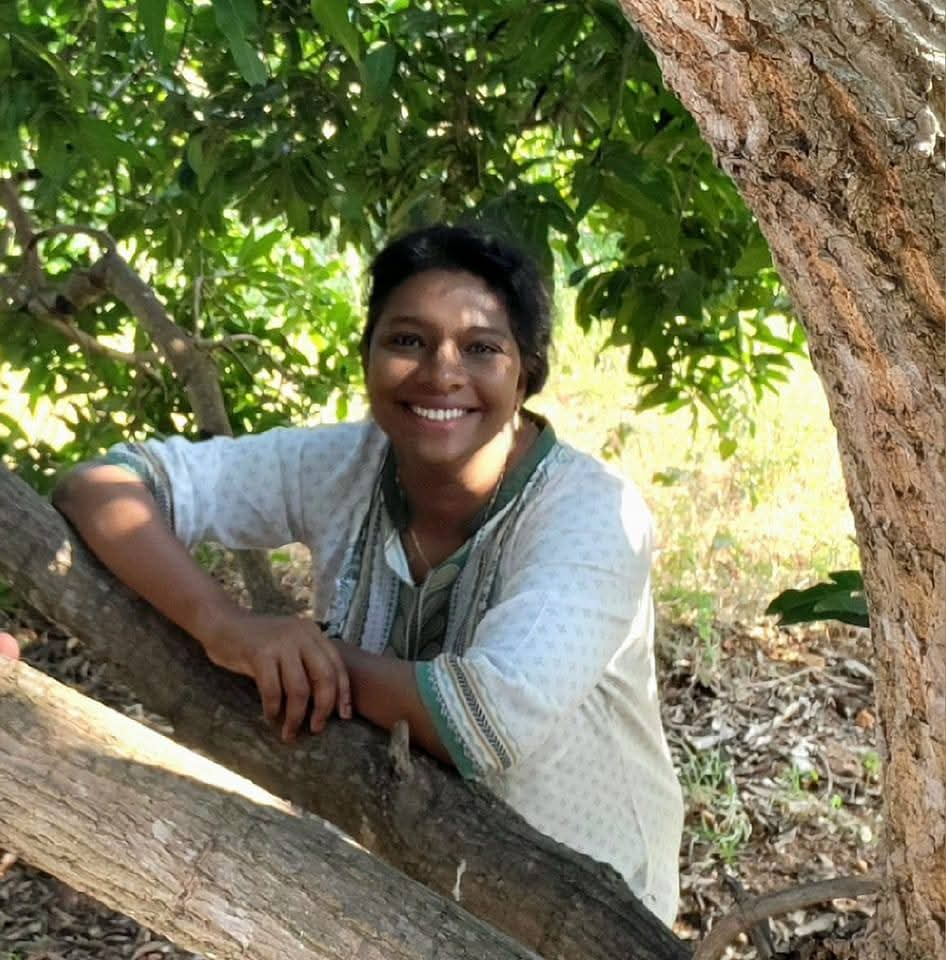
Deepa is Professor of Applied Ecology and HoD of the Department of Sustainable Land management at the University. Deepa’s research focusses on the impacts of environmental change on biodiversity and ecosystem services. She has worked in both tropical and temperate systems assessing the effects of climate change and land-use change on endangered bird populations as well as insect pollinator communities.
She also has experience as a Policy Fellow at Defra and a NERC Knowledge Exchange Fellow, working with multi-actor stakeholder communities to enhance land management for to boost biodiversity and improve ecosystem services. While much of her research has focussed on projects across UK and Europe, she has, more recently, begun working with smallholder farmers in South India towards ecological intensification of crop systems to enhance biodiversity and improve livelihoods.