First published: 13 October 2025.
Air pollution is widely recognised as a threat to human health, but its ecological reach extends far further – quietly reshaping the world of insect pollinators. This is explored in a recent research article published in Ecological Entomology, Air pollution and its multifaceted effects on insect pollinators: A review.
Recent research shows that pollutants such as ozone, nitrogen oxides and particulate matter interfere with pollinators across three major dimensions: 1) plant–pollinator interactions, 2) reproductive success and 3) overall fitness, and flight performance.
Pollutants can alter or degrade floral scent cues, disrupt pheromone communication, impair foraging behaviour, and affect key physiological traits, including the gut microbiome. These subtle yet powerful impacts reduce pollinator efficiency, shorten lifespans, and ultimately destabilise the delicate interactions between insects and the plants they service. Because pollinators rely heavily on chemical signals to locate food, navigate landscapes and find mates, any disruption to those cues can resonate through entire ecosystems and threaten crop production.
Despite the growing body of evidence, existing research remains uneven. Much of the current knowledge is based on social species such as honeybees and bumblebees, while solitary wild bees, butterflies, moths, hoverflies and wasps remain comparatively understudied. Furthermore, most work has focused on a narrow set of pollutants – predominantly ozone, volatile organic compounds, particulate matter and diesel exhaust – leaving the effects of nitrogen oxides, carbon monoxide and many other airborne chemicals insufficiently explored. Many studies investigate only one or two factors in isolation, overlooking reciprocal or cascading effects that likely occur in real-world environments.
A further limitation lies in the dominance of laboratory-based experiments, which, while controlled, cannot fully capture the complexity of natural habitats. To understand how pollinators actually fare in cities, agricultural landscapes or fragmented environments, more field-based approaches are urgently needed.
Large flight cages and mobile field laboratories, such as the Bee-Bike developed by the Working Group Animal Ecology in Münster, offer promising tools.
The Bee-Bike enables researchers to transport sensitive equipment into otherwise inaccessible landscapes and measure traits such as concentration of various air pollutants and pollinators flight performance using devices like flight mills.
As Dr. Hilke Hollens-Kuhr (author) notes, “Such methods provide crucial bridges between laboratory insights and ecological reality.”
The broader implications are clear. As Prof. Sascha Buchholz (author) emphasises,
“Insect pollinators are the unseen backbone of our food systems – by overlooking the subtle but pervasive effects of air pollution on their behaviour and survival, we risk undermining the very foundations of crop production and biodiversity.”
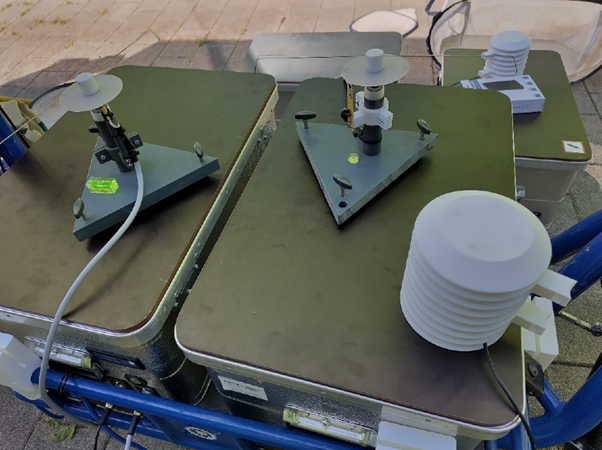 Flight mills that are transported by Bee-Bike.
Want to be featured in our Journal Highlights?
Shine a spotlight on your research by submitting your papers to any of our seven journals for the chance to be mentioned on our news pages and social media
