RES Managing Editor, Jayne Whiffin, thought the New Year would be a great opportunity to peek behind the curtains at what goes into picking the images for our journal covers.
Most of our journals have a new image every year or two, and this year, all seven journals have stunning new covers.
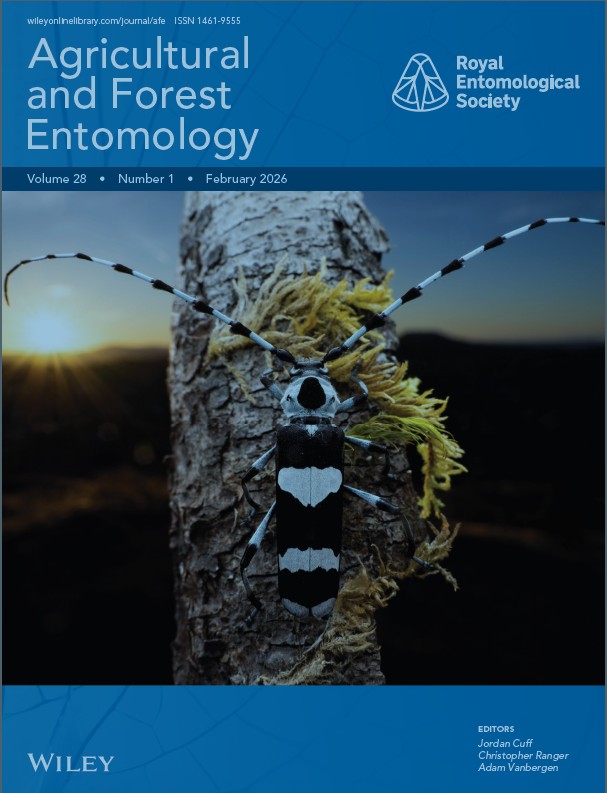
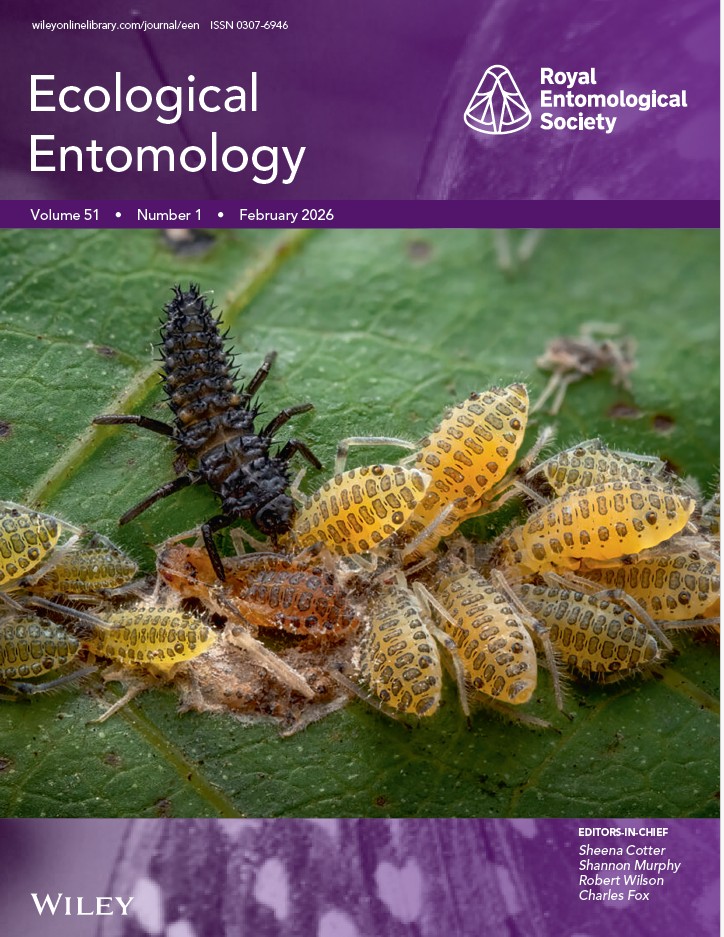
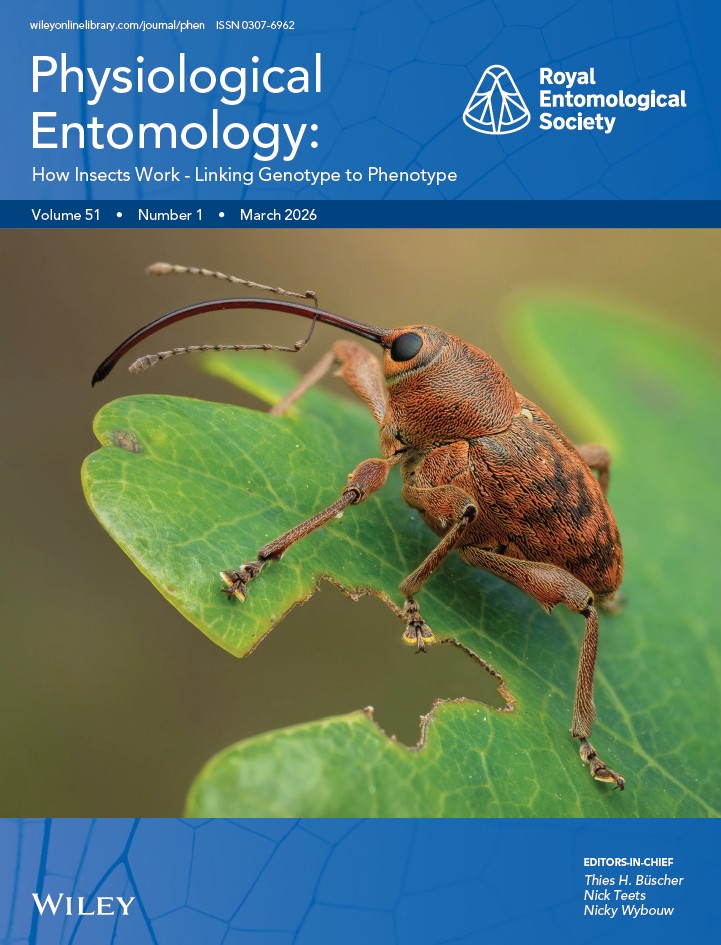
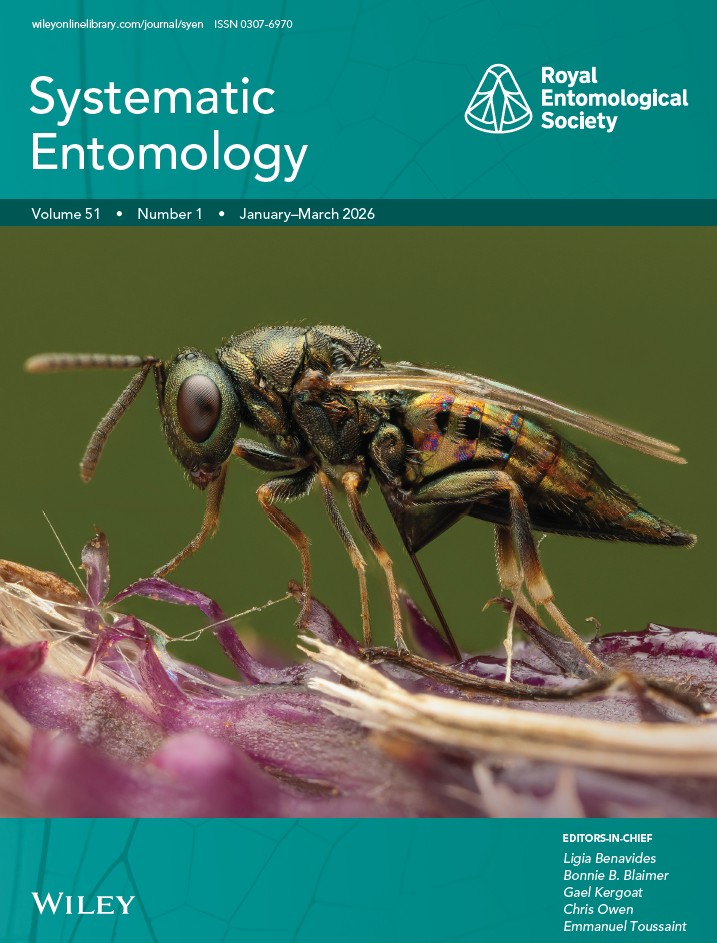
The majority of our covers include photographs from the Insect Week Photography Competitions in previous years, including this year’s covers for Agricultural and Forest Entomology, Ecological Entomology, Physiological Entomology and Systematic Entomology.
The Editors-in-Chief are invited to view the photos and then discuss options, and then the production and design teams at our publisher Wiley step in. They put together sample covers based on the images the Editors select, and the final image is then chosen.
Ecological Entomology
Agricultural and Forest Entomology
The discussions around the images are fascinating and often long-ranging, from colour choice and how striking the image is, to how suitable it might be for the journal – is the insect demonstrating something specific to the journal, for example?
Ecological Entomology chose their cover this year, for example, as it showed predation and some nice taxonomic diversity compared to recent covers. AFE eventually chose the Banded Alder Borer, not only because it’s a wood-boring pest, but because the image was so striking.
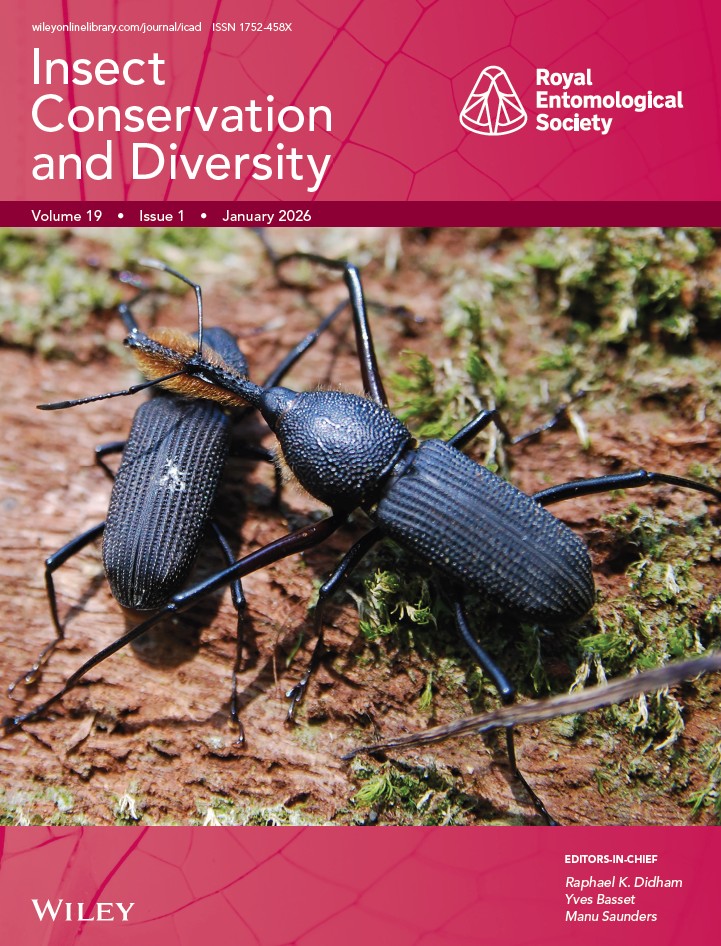
Insect Conservation and Diversity
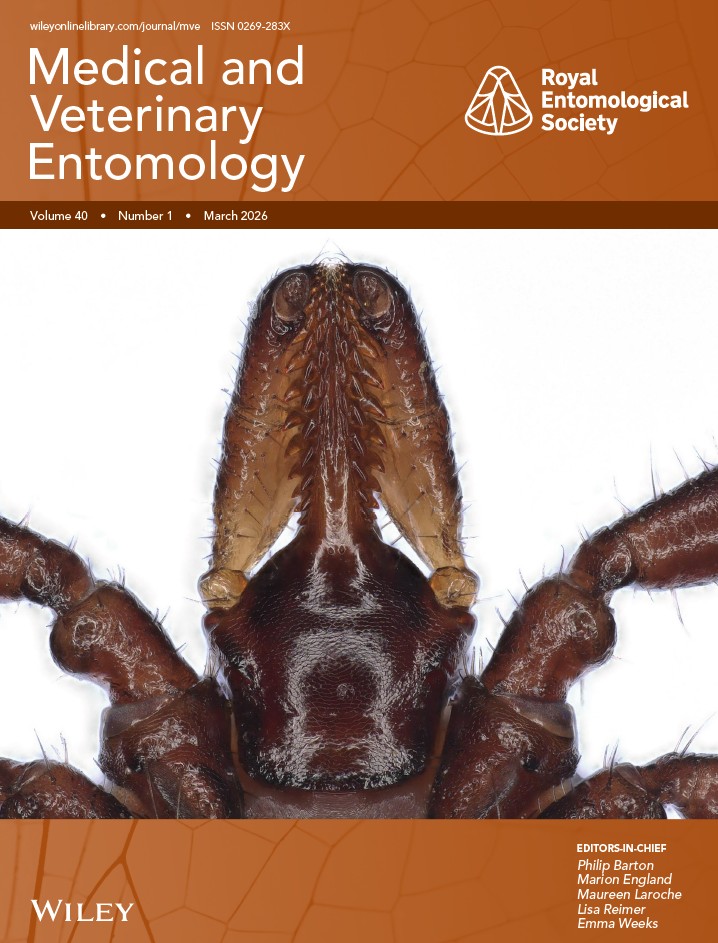
Medical and Veterinary Entomology
Both Insect Conservation and Diversity, and Medical and Veterinary Entomology feature pictures taken by their editors this year. MVE’s cover was taken by Dr Maureen Laroche (with the assistance of Mr Tanguy Tchifteyan), zooming in on the mouthparts of a tick. Insect Conservation and Diversity shows a Bearded Weevil (Rhinostomus barbirostris) male protecting the female as she bores into a dead palm tree to create a hole into which she will deposit her eggs. It was taken by Dr Yves Basset at Pipeline Road, Panama, on a trunk of a dead palm tree.
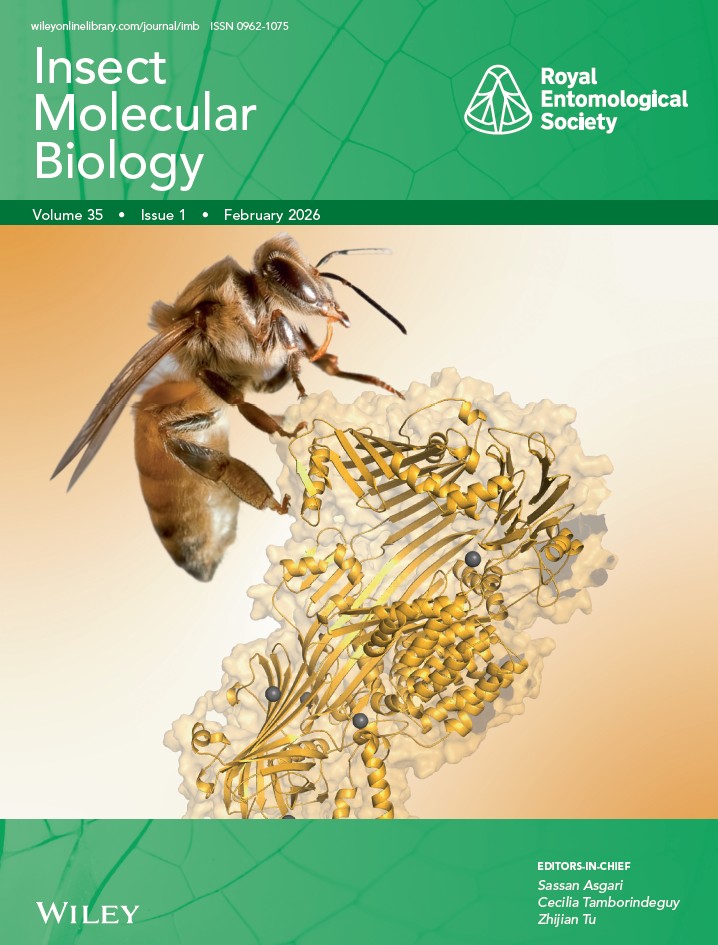
Insect Molecular Biology
 Vilde Leipert – Insect Molecular Biology Winner 2023
“For the cover image, I created a 3D structure of the honey bee protein vitellogenin (Vg) using AlphaFold, highlighting zinc ions (grey spheres) at the putative binding sites predicted in our study. This visualization represents a key finding from our research, revealing an exact Zn to Vg binding ratio and predicting the molecular binding sites that help explain how these metal ions contribute to Vg’s diverse biological roles. Understanding this relationship sheds new light on the protein’s essential roles in reproduction, immunity, lifespan, and nutrition.
By combining artificial intelligence–based structure prediction with experimental data, our interdisciplinary work offers a new perspective on Vg’s molecular mechanisms. Vg is an ancient protein found not only in honey bees but also traced back 700 million years to the beginning of multicellular animal life. Its descendants are found in many other animal species today, meaning our findings extend beyond bees and offer insights relevant to many other egg-laying species.”
– Vilde Leipart
“I’m a Teaching Professor at Arizona State University, and photography is one of my favorite hobbies. I have a PhD in Biology, so it’s no surprise that my subjects often revolve around nature and science; I frequently use my photos when I teach.
I’ve taken countless pictures of honeybees, so when Dr. Leipart requested a honeybee image, we chose this one. In contrast to most of my honeybee shots, this one was not in a natural setting: I captured this one as she was attempting to extract sugar from a Coke bottle! Dr. Leipart did a fantastic job editing out the bottle and background, making the bee fit seamlessly onto the protein structure.”
– Christofer Bang
 Christofer Bang
Want to be featured in our Journal Highlights?
Shine a spotlight on your research by submitting your papers to any of our seven journals for the chance to be mentioned on our news pages and social media
