Jaret Daniels and Nusha Keyghobadi have recently guest edited a special issue for RES journal Insect Conservation and Diversity: Restoration and rescue in an age of extinction: advances in arthropod translocation and reintroduction.
Here we find out more about Jaret and Nusha, as well as the special issue.
Tell us a bit about yourselves
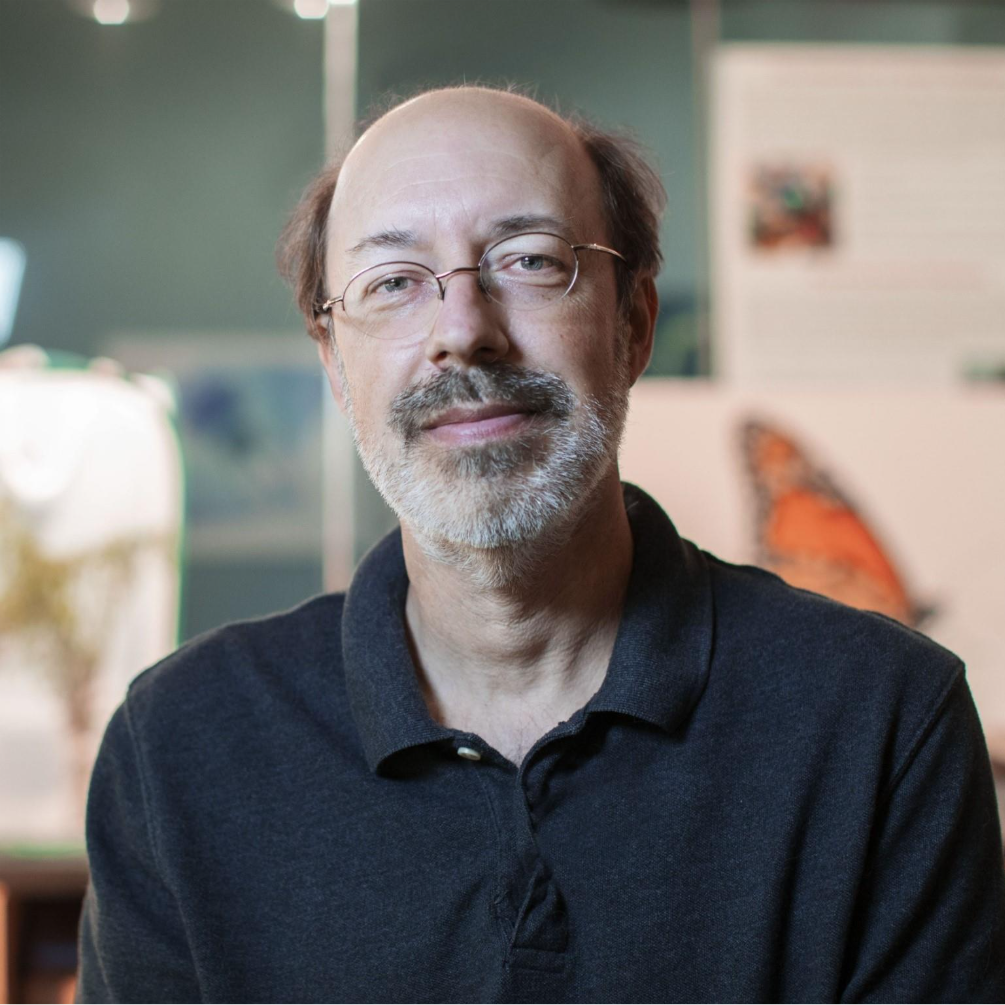 Photo credit: University of Florida
Dr. Jaret Daniels McGuire Center for Lepidoptera and Biodiversity, Florida Museum of Natural History & University of Florida
Jaret: Like most children, I became interested in insects when I was quite young. I started out rearing giant silk moths and then moved on to butterflies. I was fascinated by their biology, life history, and ecological diversity. I grew up in rural Wisconsin so having access to nature right outside my door was a huge benefit. I was equally fortunate to have parents that fostered my entomological interests. While in high school, I completed an internship at the Milwaukee Public Museum working in their Lepidoptera collection. This experience further catalyzed my already strong interest and introduced me to a broader career path. I went on to get an undergraduate degree in Biology and a Ph.D. in Entomology.
I’m currently a Professor at the University of Florida and Curator at the Florida Museum of Natural History’s McGuire Center for Lepidoptera and Biodiversity in Gainesville, Florida, U.S.A. My research focuses on the ecology and conservation of at-risk butterflies and other native insect pollinators. My lab works across many different landscapes from wild lands and farmscapes to roadsides and suburban yards in an effort to develop best insect conservation and management practices. I have particular expertise in ex situ conservation efforts and work on many taxa that are federally listed or candidates for listing on the U.S. Endangered Species Act.
 Photo credit: University of Western Ontario
Dr. Nusha Keyghobadi, University of Western Ontario
Nusha: I didn’t get into entomology until a bit later in my life, part-way through my undergraduate degree. I was looking for opportunities to get experience doing field-based research, and a good friend of mine (who is now also an entomologist!) suggested I speak to a professor who worked in forest entomology. I was given the opportunity to spend a summer in remote northern Ontario, Canada working with spruce budworm and other insects. That’s when I really got turned on to entomology.
I was taken by the tremendous diversity and beauty of insects and came to appreciate the traits that make them excellent subjects for population-level studies. I’ve worked almost exclusively with insects ever since. I’m now a Professor at the University of Western Ontario, in London, Ontario, Canada. My research focus is on population and conservation genetics. I mostly work with butterflies these days and am looking at genetic aspects of reintroduction efforts, as well as how landscape features and climate extremes shape patterns of neutral and adaptive genetic diversity.
What is the scope of the special issue?
Nusha: This special issue is intended to cover all aspects of conservation translocation for insects and other arthropods, with an emphasis on reintroduction efforts. The Special Issue Editorial outlines this in more detail.
What type of papers are included in the special issue?
Both: This issue includes quite a broad range of papers. There are full research papers addressing key themes in insect translocation science such as translocation planning, modelling to assess alternative management scenarios, and ex situ (i.e., captive) breeding, usually within the context of a specific case study. There are also reports of the outcomes of specific translocation and reintroduction efforts, some quite recent and some undertaken many years ago and now undergoing long-term monitoring. There is a methodological paper presenting a novel method to monitor bacterial disease in captive and translocated populations of insects. An experimental paper assesses the efficacy of immune priming to reduce disease burden in translocated populations. And, a conceptual Forum paper provides a framework for considering how behavioural syndromes (that is, ‘personality’) might play a role in determining translocation outcomes for insects. The papers are also on a variety of insect taxa from several geographic areas (Asia, Australasia, Europe, and North America).
What is the importance of this special issue and the topic?
Jaret: In many ways, the field of Reintroduction Biology remains underrepresented in the scientific literature despite its growing importance as a tool to help combat global species declines. Insects, because of their size, reproductive potential, and utility for care in a captive environment, make them particularly good candidates for ex situ conservation programs especially when comparison to vertebrates. Sharing methodologies and results is vital to help enhance best practice and ultimately improve conservation success.
Nusha: To address the biodiversity crisis, we must of course preserve and connect habitats – to hang on to what we have left. But, restoring habitats and reintroducing species to areas they’ve disappeared from – bringing things back – is also an important part of biodiversity conservation. Importantly, these efforts provide positive, ‘good news’ stories that galvanize the public and get them excited about conserving biodiversity. This special issue aims to highlight and celebrate these stories.
What is the future of research suggested by this Special Issue?
Both: This special issue reveals broad scientific interest in insect translocation that cuts across taxa and geographic regions. At the same time, the special issue reflects known biases in that body of research and work, for example with most efforts taking place on butterflies and grasshoppers, and in Europe or Australasia. It’s clear that there’s much scope for translocation research to expand to a broader range of insects, and other arthropods, and to cover more diverse geographic areas, particularly the global south. In terms of key research themes, captive rearing and breeding, disease monitoring and management, and post-release dispersal are clearly areas of strong interest in which there are still many unknowns and considerable scope for future research. We hope that this special issue inspires such research, and encourages scientists and managers involved with insect translocation efforts to continue to share and report the results of their valuable work.
Follow us on social media for updates and share your insect news and events using @royentsoc
