First published: 19 July 2025.
Sodium is a crucial element for animal physiology, yet its effects on behavior and lifespan remain understudied, especially in insect herbivores. The amount of sodium a caterpillar has access to not only influences its own performance but also affects aspects of its adult mating behavior and lifespan.
A recent study published in Ecological Entomology (Vincent et al., 2025, Eco. Ento.) studied how caterpillars’ access to sodium influenced the adult lifespan and reproductive behaviors of the bordered patch butterfly (Chlosyne lacinia, Geyer, 1837; Lepidoptera: Nymphalidae).
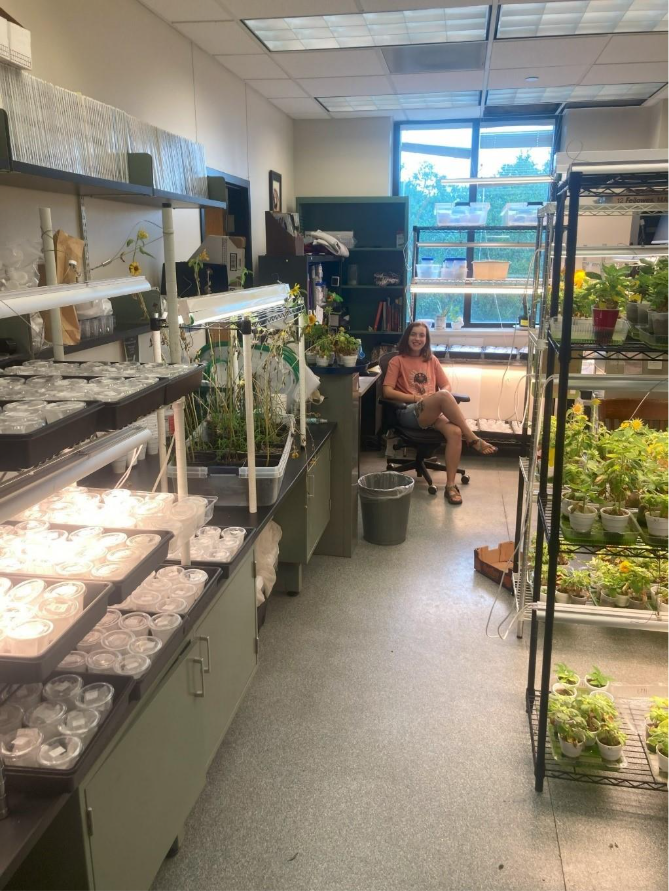 Maggie C. Vincent (lead author) in the laboratory with sunflowers (front right) and pupating C. lacinia (front left).
As caterpillars, they feed on plants like sunflowers and ragweed. Across their geographic ranges, plants vary in how much sodium is accumulated in their own tissues, thereby exposing caterpillars to variation in dietary sodium concentrations (Santiago-Rosario et al., 2022, PEI).
Females raised on high sodium diets as caterpillars began mating sooner than females raised on low sodium diets. Both males and females raised on high sodium diets lived on average 1.5 fewer days, a rather large margin for an organism that only spends about a week as an adult. Despite these effects, the length of the mating remained unchanged.
Clearly, sodium in high amounts in a butterfly’s diet can shorten its lifespan and impact mating timelines.
 Luis Santiago-Rosario (co-author) during a pit stop while doing field work in Texas, USA.
“Given sodium’s importance for organismal performance, ecology, and evolutionary history, uncovering its role in behavior, especially in butterflies, remains a compelling challenge. Chlosyne lacinia has proven to be an ideal organism for exploring how individuals balance elements like sodium in their bodies and how that process shape populations and behaviors in interesting and unique ways.
In the lab, we think of this butterfly as one of our ‘magic wells’ of knowledge, continually offering gifts of discovery (just as Nobel laureate Karl von Frisch – who coined the term – celebrated honeybees for their utility for research). We hope it remains an inspiration for future studies that reach far beyond the questions we’ve explored so far.”
– Luis Santiago-Rosario
What can the behavior of a salty butterfly tell us? This butterfly isn’t the only organism dealing with ever-increasing sodium. Climate change has already led to more drought events, meaning agriculture is relying more on irrigation to meet water demands. Most water currently used for irrigation is brackish, and this is expected to increase with higher irrigation needs (Liu et al., 2020, Trends Plant Sci). This will lead to more sodium accumulation in the soil, an effect called soil salinization (Palmgren & Shambala, 2024, Front Sci). Knowing how sodium affects behavior and life history is crucial to studying the potential effects of climate change on organisms and predicting ecological shift.
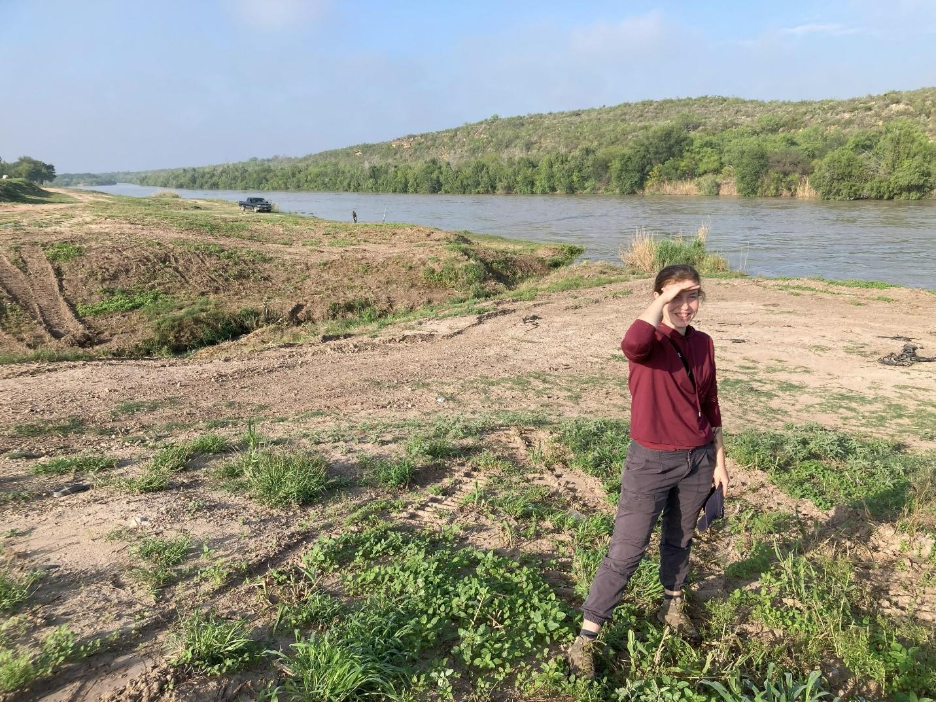 Maggie C. Vincent (lead author) in the field in Texas. Behind her is the Rio Grande and beyond is Mexico.
“It is important to look across life stages to see how an individual’s environment in one stage may influence other stages. People may think of a caterpillar and butterfly as completely separate, but we found that differences during early development can have lasting effects on adult behavior and lifespan.”
– Maggie C. Vincent
Want to be featured in our Journal Highlights?
Shine a spotlight on your research by submitting your papers to any of our seven journals for the chance to be mentioned on our news pages and social media
Follow us on social media for updates and share your insect news and events using @royentsoc
