Lacewings and Antlions
Since the time of Linnaeus the Neuroptera were often treated as a convenient receptacle for the diverse groups of endopterygote insects that did not fit anywhere else; the modern view is that the group is closely related to the Megaloptera and Raphidioptera.
To avoid confusion with the name Neuroptera in its older broad sense, some authors employ the name Planipennia for the modern restricted usage. Even though they are clearly defined as a monophyletic order within the Neuropterida, they still show a wide diversity of size, habits and life cycles, ranging from the tiny Coniopterygidae, or wax flies, which resemble Hemipteran whiteflies; the giant lacewing Osmylus, which has large strongly patterned wings and a semi-aquatic larva; the Sisyridae, or sponge-flies, which have aquatic larvae that feed on freshwater sponges; the large ant-lions which superficially resemble dragonflies, and whose larvae build conical pits in sandy soil to trap prey; and both the brown lacewings (Hemerobiidae) and green lacewings (Chrysopidae) which are familiar visitors to gardens.
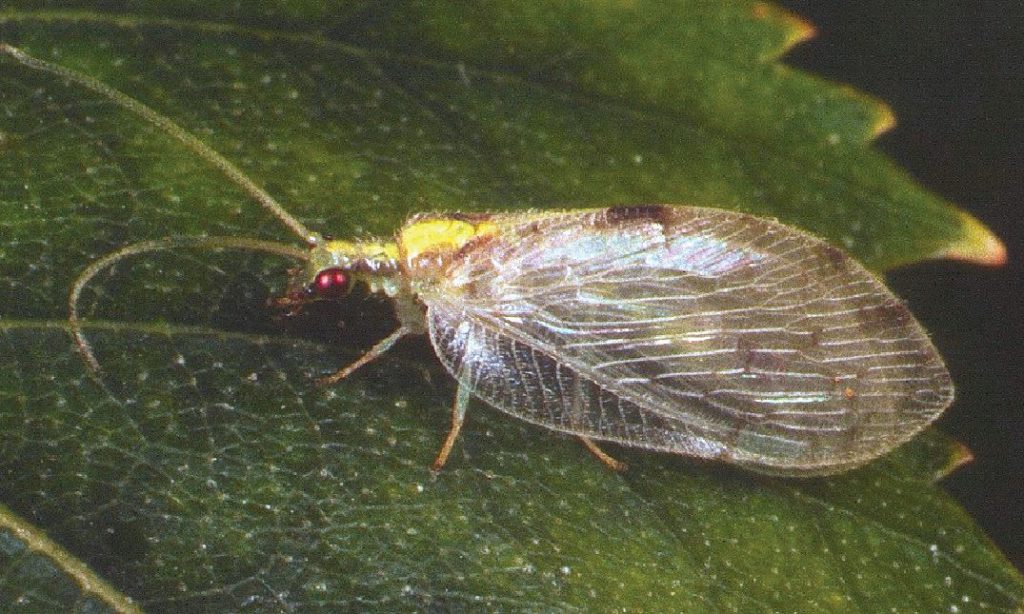 Hemerobius marginatus Credit Roger Key
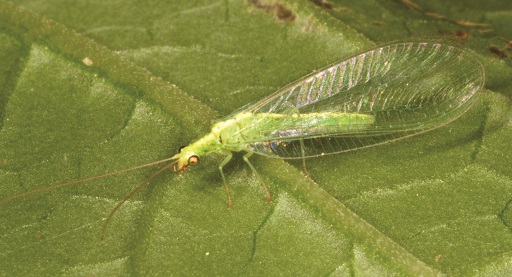 Pale species of Chrysoperla carnea complex Credit Roger Key
Neuroptera have predatory larvae, and many adults are also predators on small insects; several groups are regarded as beneficial insects in the garden because of the large numbers of aphids they consume.
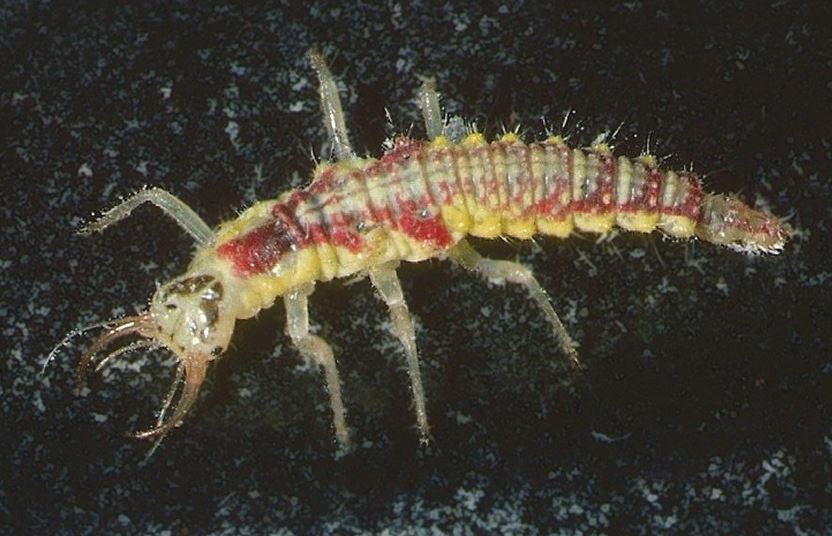 Chrysopid larva Credit Roger Key
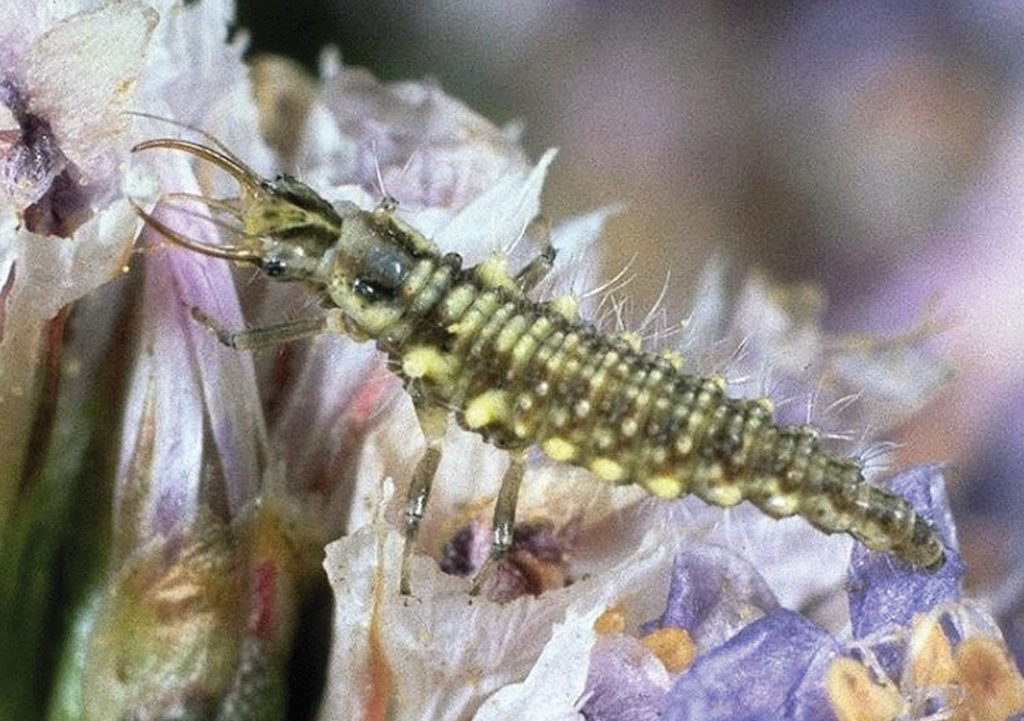 Chrysopid larva Credit Roger Key
Lacewings court by ‘tremulation’, a low frequency sound produced by vibrating their abdomens, which in turn causes the substrate they are standing on to vibrate. The males and females will take turns tremulating; this duet is an essential prerequisite for mating.
Worldwide there are around 6,000 known species in 17 families; in Britain there are 70 species in 6 families.
Antlions (Myrmeleontidae)
Adult antlions are similar to both lacewings and dragonflies: they have long abdomens. and long wings with delicate patterns, but their antennae are clubbed at the end.
Adults feed on nectar and pollen, but larvae are famous for constructing conical pitfall traps, generally in sandy soils. They inject venom into prey to paralyse them, and then suck out and feed on internal fluids.
Only one species, the European antlion Euroleon nostras, occurs in the UK, and is restricted to a few sites in East Anglia and Kent.
Identification help


