Paper first published: 10 July 2025
Press release by The Spanish National Research Council (CSIC)
Rising temperatures and lower oxygen levels in water are causing aquatic insects to become smaller and experience increased mortality. Aquatic insects play a vital role in ecosystems. The combined effects of declining insect numbers and shrinking body sizes could lead to significant disruptions in aquatic ecosystems.
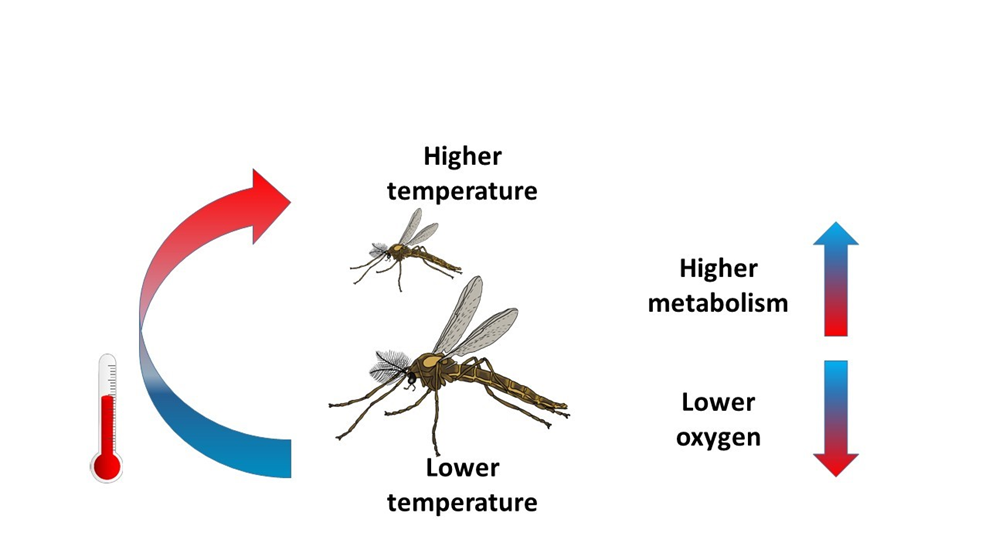
An international study led by the Doñana Biological Station – CSIC has shown that lower oxygen availability in warm waters—caused by rising temperatures— may be leading to a reduction in the size of aquatic insects. This shrinkage is linked to lower survivability and fitness of aquatic insects, with harmful consequences for aquatic ecosystems, including decreased fish availability due to important impacts on the food web.
The study, with the collaboration of the Slovakian Academy of Science and University of Granada, was published in the journal Ecological Entomology.
” Decreasing of the size of the aquatic insects is the other aspect of the insect decline, which is also connected to the rising global temperatures – not only there are fewer insects, they can be also smaller. “We’re not just seeing fewer insects—those that remain are also smaller. This double effect of the decrease of numbers and of sizes of aquatic insects undermines their ability to maintain crucial ecosystem functions.”
– Viktor Baranov, researcher at the Doñana Biological Station and lead author of the study
To investigate this phenomenon, the research team designed an experiment to explore the relationship between water temperature, oxygen concentration, and body size in Chironomus riparius, a species of non-biting midge whose larvae are aquatic. They compared insect size and survival under six different scenarios: three at 20°C with high, medium, and low oxygen levels, and three at 30°C under the same oxygen conditions.
The results were clear and build upon the findings previously published by the researcher and his collaborators in 2021, when they confirmed that the size of non-biting midges was related to temperature. Larvae raised in warm, low-oxygen water were 10% smaller than those in the other five scenarios. These conditions also caused faster development and increased mortality rates.
“As climate change leads to water temperatures and oxygen becomes less soluble, these larvae are struggling to grow. This is due to the fact that respiration is essentially a motor of the animals´ growth. Given their critical ecological roles, the impact of climate change on these organisms is deeply concerning.”
– Viktor Baranov
Aquatic insects are crucial for water purification, water pollution monitoring, and maintaining food webs, as they serve as prey for many other species. Moreover, once they become adults, some species contribute to other essential processes such as crop pollination. Some of them also have recreational functions for humans, such as dragonflies, which have an important aesthetic and cultural component.
This study lays the groundwork for broader research into how climate change affects functional traits like body size, complementing existing data on declining insect populations. It also raises new questions about how the ecosystem effects of the shrinking animal sizes.
Baranov, V. Losana-García, J., Pascual, J., Fernández Bermejo, S. & Hamerlik, L., Impact of temperature and hypoxia on the size and survival of aquatic insects. Ecological entomology.
Read the piece on CSIC – Climate Change Reduces the Size and Survival of Aquatic Insects | Spanish National Research Council
Read the piece in The Conversation – Rising temperatures wreak havoc on aquatic insects: this is how we have studied it
Want to be featured in our Journal Highlights?
Shine a spotlight on your research by submitting your papers to any of our seven journals for the chance to be mentioned on our news pages and social media.
Follow us on social media for updates and share your insect news using @royentsoc
