The Royal Entomological Society’s conservation work took centre stage during Insect Week 2026 as Conservation Project Manager David Simcox FRES and Conservation Project Officer Sarah Meredith welcomed a delegation of guests from Danish Nature Agency Storstrøm and Vordingborg Municipality to witness one of Europe’s most remarkable butterfly conservation success stories.
Working alongside Danish partners through the LIFE Orchids nature restoration project, David and Sarah guided visitors around the site supporting the critically threatened Large Blue butterfly (Phengaris arion), known in Denmark as the “black-spotted bluebird”. Guests had the opportunity to see numerous Large Blues on the wing and learn about the Society’s ongoing efforts to help secure the future of the species in Denmark.
Despite the heat wave, many specimens of the rare black-spotted bluebird were spotted on Friday 26 June, an extremely reassuring sight for conservation of this beautiful endangered insect species. It was estimated that the population is stable, but still vulnerable, as it is found exclusively on East Møn in Denmark.
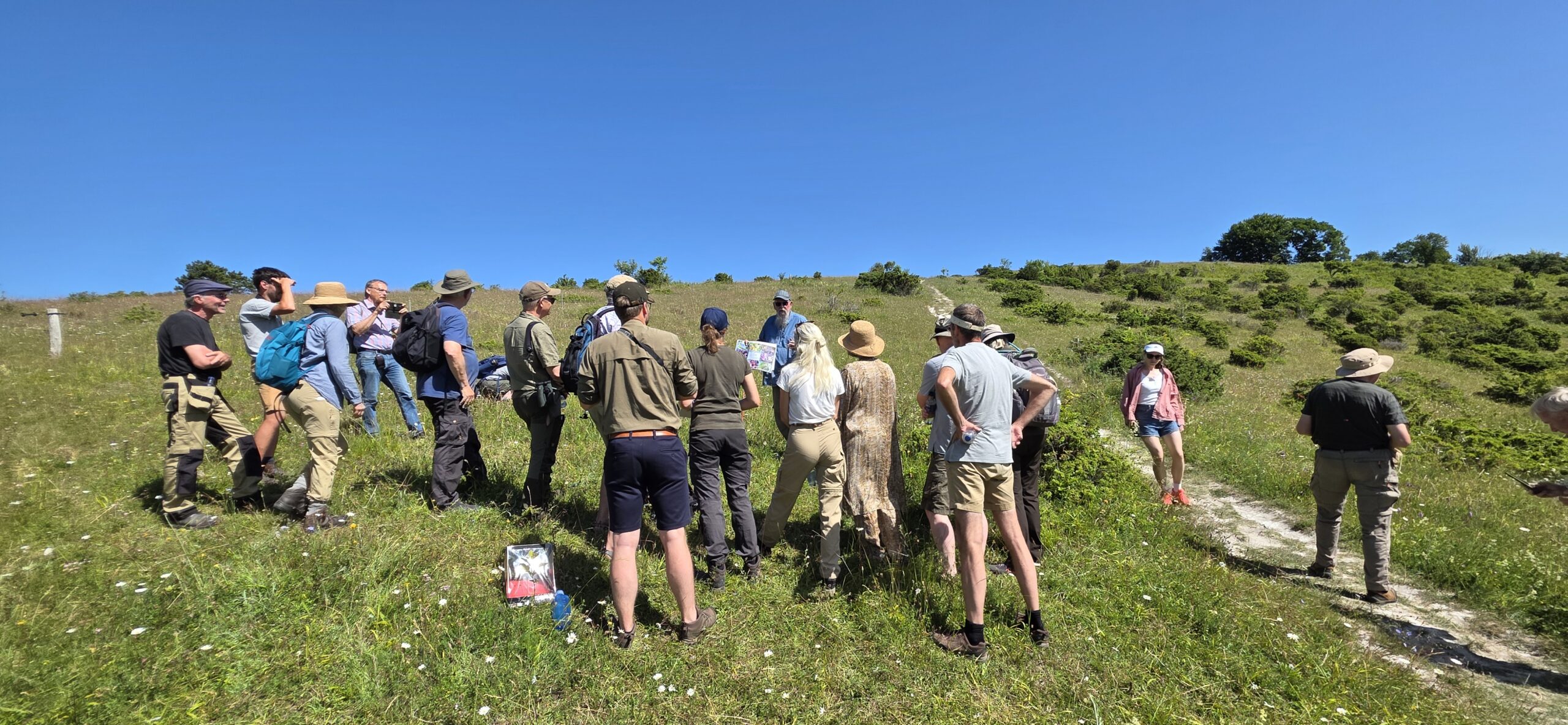
The visit included surveys at Høvblege on the island of Møn, home to Denmark’s only remaining Large Blue population.
The Royal Entomological Society has been working with Danish colleagues to assess habitat quality, monitor butterfly populations and their host ants, and develop long-term conservation strategies to ensure the survival of this important colony.
Recent surveys have revealed the population is thriving, with more than 6,000 butterflies recorded at the site.
Image: Sarah Meredith showing the participants tiny butterfly eggs, which are laid in the flower heads of the plants thyme and marjoram.
Throughout the day, visitors learned about the extraordinary ecology of the Large Blue, one of Europe’s most fascinating butterflies, whose survival depends on a delicate relationship with specific wildflowers and a single species of ant.
The Society’s conservation team shared how decades of experience restoring the species in the UK are now helping to inform recovery efforts overseas.
Alongside the abundance of Large Blues flying across the flower-rich grasslands, stylish goats and Galloway cattle could be seen helping to graze and maintain the habitat.
Like grazing animals across many protected sites, these four-legged habitat managers play an important role in maintaining the open conditions required by many rare plants and insects.
“It was wonderful to welcome our Danish partners and guests to see Large Blues flying in such good numbers. Seeing this species thrive on Møn is a testament to many years of dedicated habitat management and collaboration.
We’re excited by the potential for future reintroductions and the opportunity to help create a more secure future for this remarkable butterfly in Denmark.”
– David Simcox FRES, RES Conservation Project Manager
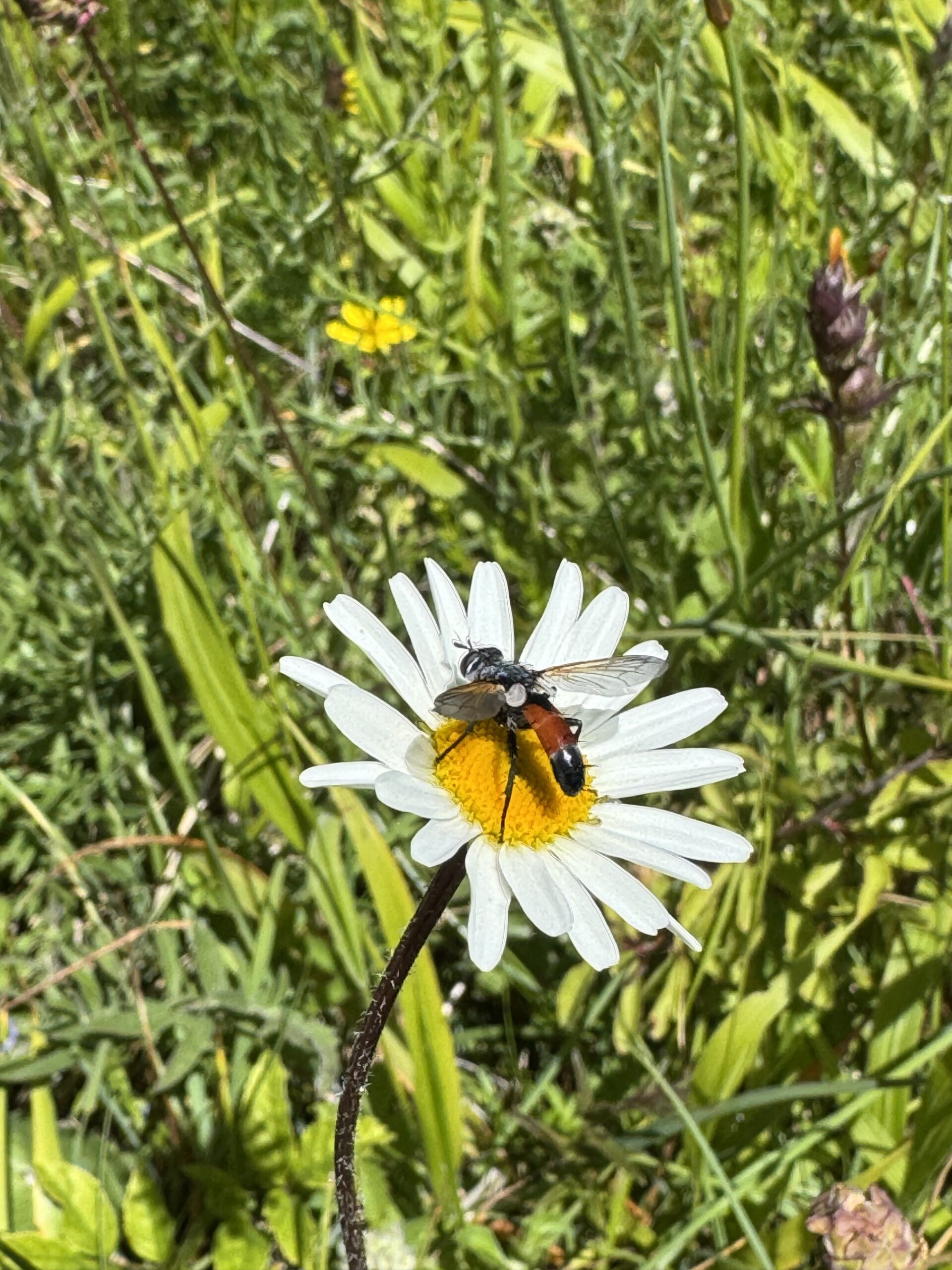 Cylindromyia brassicaria – a fly in the Tachinidae family
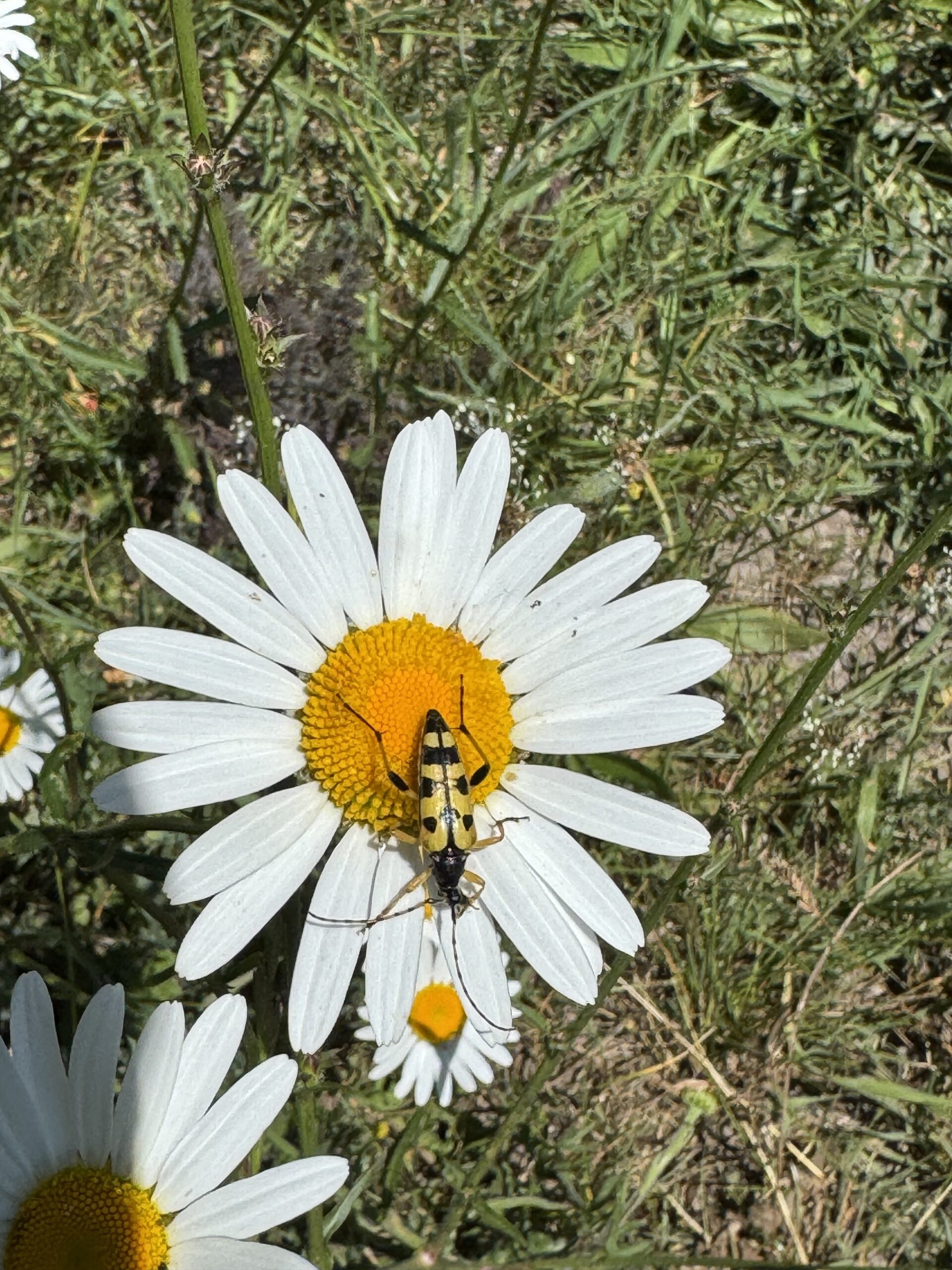 Spotted longhorn beetle – Rutpela maculata
Other visitors to the site – a Large Tube-tail fly (Cylindromyia brassicaria), and a Spotted longhorn beetle (Rutpela maculata)
Spotted longhorn beetle – Rutpela maculata
Other visitors to the site – a Large Tube-tail fly (Cylindromyia brassicaria), and a Spotted longhorn beetle (Rutpela maculata)
The visit highlighted the value of international collaboration in insect conservation and demonstrated how knowledge gained through the Royal Entomological Society’s pioneering Large Blue work continues to support biodiversity recovery projects far beyond the UK.
Help promote our message
Support doesn’t need to be in the form of a monetary donation – share your support by spreading the word.
