Article by Jack Everist, Ecologist
Insects form the largest and most diverse component of Britain’s biodiversity. They pollinate crops and wild plants, recycle nutrients, regulate populations of other organisms, and form the base of food webs that sustain birds, mammals, amphibians and reptiles. They also play a central role in cultural life, inspiring art, literature and public fascination. Yet despite their ecological and social importance, insects are largely absent from British law and policy.
While some species benefit from statutory protection, the overwhelming majority of invertebrates receive no explicit legal recognition. For many, their fate depends on proxy protections applied through habitats, general biodiversity duties, or indirect legislation such as pesticide controls. This article explores the current state of insect protection across England, Wales and Scotland, comparing how each jurisdiction addresses invertebrates in terrestrial ecological law. It assesses where meaningful safeguards exist, where gaps persist, and why insects, despite being excellent biological indicators, continue to fall through the cracks of environmental policy.
Insects as biological indicators
Biological indicators are organisms whose presence, absence or condition provide insight into ecosystem health. Insects are exceptionally well suited to this role. They occupy almost every terrestrial niche, respond quickly to environmental change, and interact with plants, soils and other animals in ways that reveal the state of ecosystems more reliably than single vertebrate species or vegetation types.
Butterflies, for example, are among the most widely used bioindicators of terrestrial ecosystems. Long-term monitoring schemes such as the UK Butterfly Monitoring Scheme demonstrate how species like the Speckled Wood (Pararge aegeria) expand in response to climate warming, while habitat specialists such as the Marsh Fritillary (Euphydryas aurinia) decline with grassland loss (Fox et al., 2015). Freshwater insects provide equally powerful signals: the presence of pollution-sensitive mayflies (Ephemeroptera) and stoneflies (Plecoptera) is routinely used to assess river health. Other groups offer subtler but equally critical insights. Ground beetles (Carabidae) are used in agri-environment research to measure soil health and tillage impacts. Hoverflies (Syrphidae) indicate the availability of flower resources and the condition of wetland margins. Ants reflect soil composition and disturbance regimes.
Despite this, the potential of insects as bioindicators is not embedded in most statutory frameworks. Ecological impact assessments often focus on birds, bats and vascular plants, even though insects may be more sensitive to disturbance. As a result, policies risk missing early warning signals of biodiversity decline.
Britain’s legal landscape
The legal frameworks that govern biodiversity in Britain arise from a combination of domestic legislation and international commitments, including EU-derived measures and multilateral environmental agreements. While there are now clear differences in approach between England, Wales and Scotland, these largely reflect the effects of devolution and differing policy priorities rather than Brexit itself or the loss of EU funding. Nonetheless, all three countries continue to share a common legislative backbone rooted in long-standing domestic statutes and international obligations. The following sections examine the main laws and policies relevant to terrestrial invertebrates, assessing their contributions and limitations.
The Wildlife and Countryside Act 1981
The Wildlife and Countryside Act 1981 (c.69) (WCA) remains the cornerstone of species protection in Britain. Schedule 5 of the Act lists species afforded full protection from killing, injury, disturbance and, in some cases, damage to their places of shelter. For invertebrates, the list is strikingly short — fewer than 80 species out of the tens of thousands present in Britain (JNCC, 2022).
Examples include the Fisher’s Estuarine Moth (Gortyna borelii lunata), the Large Blue butterfly (Phengaris arion) and the Sussex Emerald moth (Thalera fimbrialis). These species benefit from strong safeguards: damaging their habitats or intentionally disturbing them can result in prosecution. However, the listing process is slow, heavily reliant on Red Data Book status, and infrequently updated. Many petitions for listing — such as for the Stag Beetle (Lucanus cervus) or the oil beetle (Meloe proscarabaeus) — have been rejected on the grounds that populations remain locally strong, even though declines are well documented. As a result, Schedule 5 creates a two-tier system in which a tiny minority of insects receive direct protection, while the majority, including many declining pollinators and saproxylic beetles, are excluded.
Habitats Regulations
The Conservation of Habitats and Species Regulations 2017 (SI 2017/1012) in England and Wales, and the Conservation (Natural Habitats, &c.) Regulations 1994 in Scotland (as amended), implement the EU Habitats Directive. These Regulations protect species listed on Annex II (requiring designation of Special Areas of Conservation) and Annex IV (requiring strict protection). For insects, the list is again narrow. In Britain, Annex species include the Southern Damselfly (Coenagrion mercuriale) and the Large Blue butterfly. Legal obligations for these species are stronger than under the WCA: their breeding sites and resting places must not be damaged or destroyed, and deliberate capture or disturbance is prohibited. Yet the Habitats Regulations are largely silent on the vast majority of invertebrates, despite their ecological roles. In practice, Special Areas of Conservation may safeguard insect-rich habitats incidentally, but insects are not the drivers of designation.
The Environment Act 2021
The Environment Act 2021 (c.30) represents a major reform in England, introducing Local Nature Recovery Strategies (LNRS) and a statutory requirement for 10% Biodiversity Net Gain (BNG) in new developments. While the Act’s ambitions are significant, insects are not explicitly mentioned. The biodiversity metric underpinning BNG focuses on habitat condition and distinctiveness, with little reference to invertebrate assemblages. Habitats critical to many insects, such as bare ground, early successional stages, and decaying wood, are undervalued in the metric. This creates a risk that developments will deliver net gains on paper while failing to support insect populations in practice.
Wales and Scotland have not introduced equivalent statutory BNG requirements, though similar principles are being explored through planning reforms and biodiversity duties.
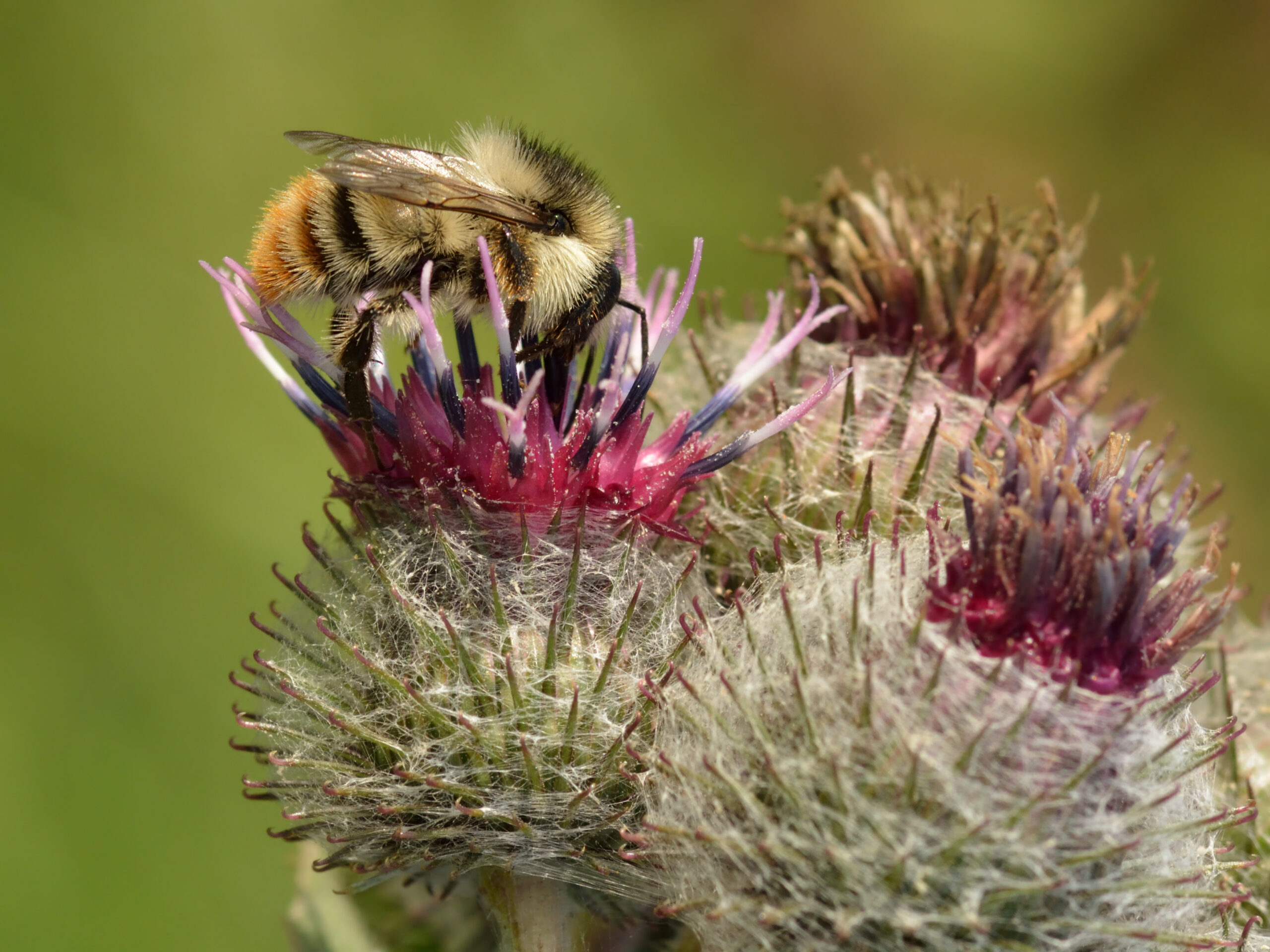 Figure 1. Shrill Carder Bee (Bombus sylvarum) foraging on Downy Burdock (Arctium
tomentosum). Credit: Ivar Leidus (CC BY-SA 4.0).
The NERC Act 2006 and devolved biodiversity lists
The Natural Environment and Rural Communities Act 2006 (c.16) places a “biodiversity duty” on public authorities in England and Wales, requiring them to “have regard” to conserving biodiversity. The Act also established Section 41 (England) and Section 7 (Wales) lists of species of principal importance. These lists include many insects, from the Shrill Carder Bee (Bombus sylvarum) (Fig. 1) to the Violet Click Beetle (Limoniscus violaceus).
In theory, public bodies should consider these species when making decisions. In practice, the duty is weakly enforced. Reviews by the Environmental Audit Committee have described it as “toothless” (EAC, 2017), and many local authorities remain unaware of their obligations.
In Scotland, the Nature Conservation (Scotland) Act 2004 (asp 6) created the Scottish Biodiversity List (SBL), which also includes numerous insects. Scotland has taken biodiversity duty reporting more seriously, with statutory requirements for public bodies to report every three years. Nevertheless, there is little evidence that this has translated into meaningful gains for insects on the ground.
CITES and wildlife trade controls
The Convention on International Trade in Endangered Species of Wild Fauna and Flora (CITES) regulates international trade in threatened species, including a small number of insects that are attractive to collectors or have commercial value. The United Kingdom remains a Party to CITES in its own right, and the convention is implemented domestically through the retained EU Wildlife Trade Regulations and the Control of Trade in Endangered Species Regulations 2018, which establish offences, permitting requirements and enforcement powers.
In practical terms, this means that import, export, re-export and certain forms of commercial use of listed insects are subject to a licensing system. For example, the Satanas Beetle (Dynastes satanas), a large rhinoceros beetle from Bolivia, is included in CITES Appendix II because of pressure from international collecting; any international trade in this species, including movements into or out of the UK, must comply with CITES documentation requirements and corresponding domestic permit controls. This framework can provide an important safeguard for a small number of highly collectible insect taxa by ensuring that trade is monitored, controlled and, in principle, kept within sustainable limits.
However, the scope of CITES is necessarily narrow. It applies only to species listed in its Appendices and is concerned with regulating international trade, rather than addressing broader drivers of insect decline such as habitat loss, pollution or pesticide use. As such, CITES operates as a complementary, trade-focused layer of protection that sits alongside domestic species protection, habitat conservation and environmental management laws, rather than as a comprehensive mechanism for conserving Britain’s insect fauna.
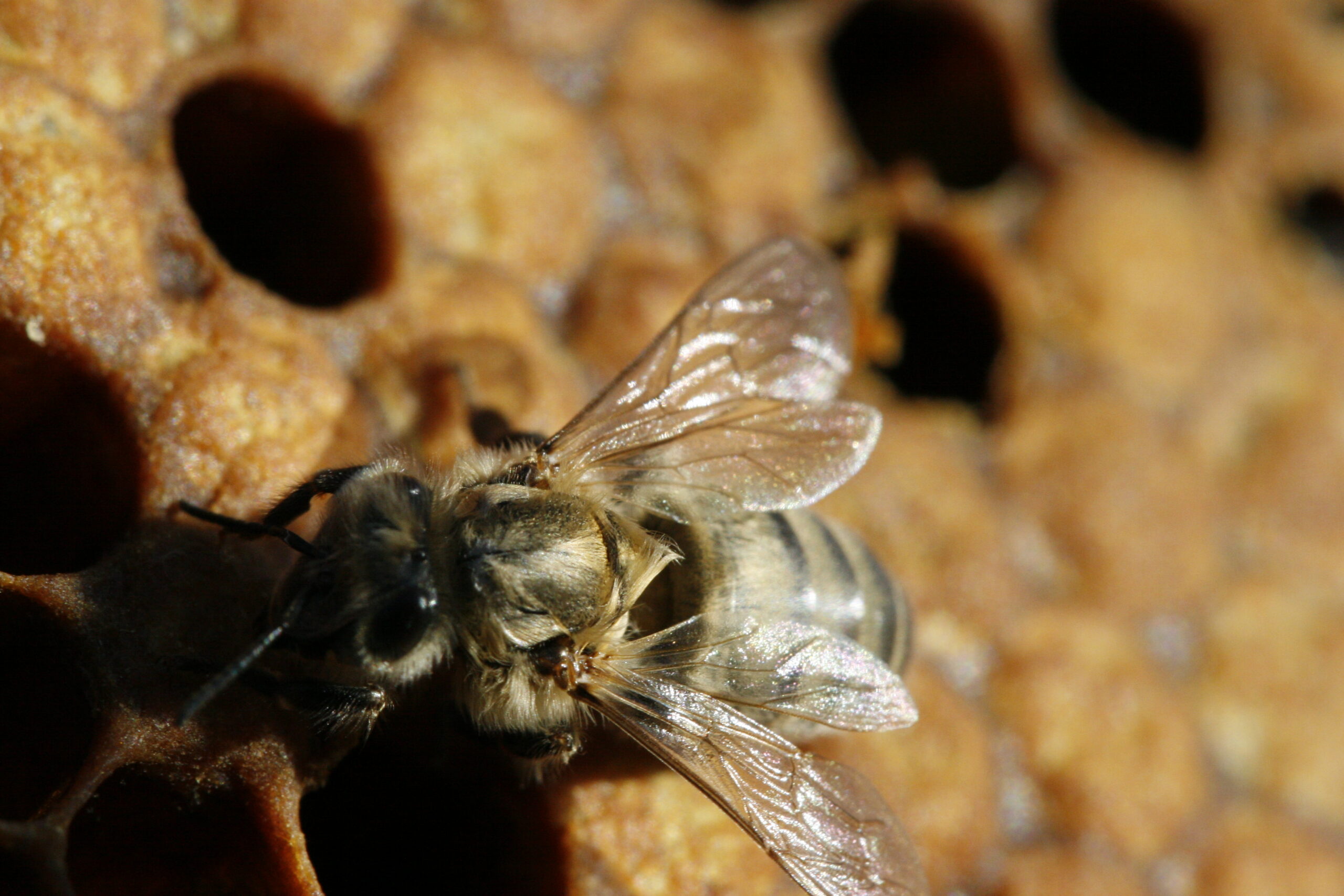 Figure 2. Dark European Honey Bee (Apis mellifera mellifera) worker emerging from brood cell.
Credit: Abalg (Public domain).
Bee disease and pest orders
Bees receive unique attention under plant health and animal disease legislation. The Bee Diseases and Pests Control (England) Order 2006 (SI 2006/342), and equivalents in Wales and Scotland, regulate the movement of honey bees and require notifiable disease reporting.
Scotland has gone further by designating the islands of Colonsay and Oronsay as a reserve for the native Dark European Honey Bee (Apis mellifera mellifera) (Fig. 2). Under the Bee Keeping (Colonsay and Oronsay) Order 2013 (SSI 2013/279), only this subspecies may be kept there, protecting a genetically important population. This represents one of the few examples of legislation crafted specifically for insect conservation, rather than incidental protection.
Invasive Alien Species legislation
The Invasive Alien Species (Enforcement and Permitting) Order 2019 (SI 2019/527) implements EU Regulation 1143/2014 on invasive alien species. For insects, the Asian Hornet (Vespa velutina) (Fig. 3) is the most notable example, with restrictions on keeping, breeding and releasing. While this provides a framework for rapid eradication responses, it is reactive rather than proactive and covers only a small number of species.
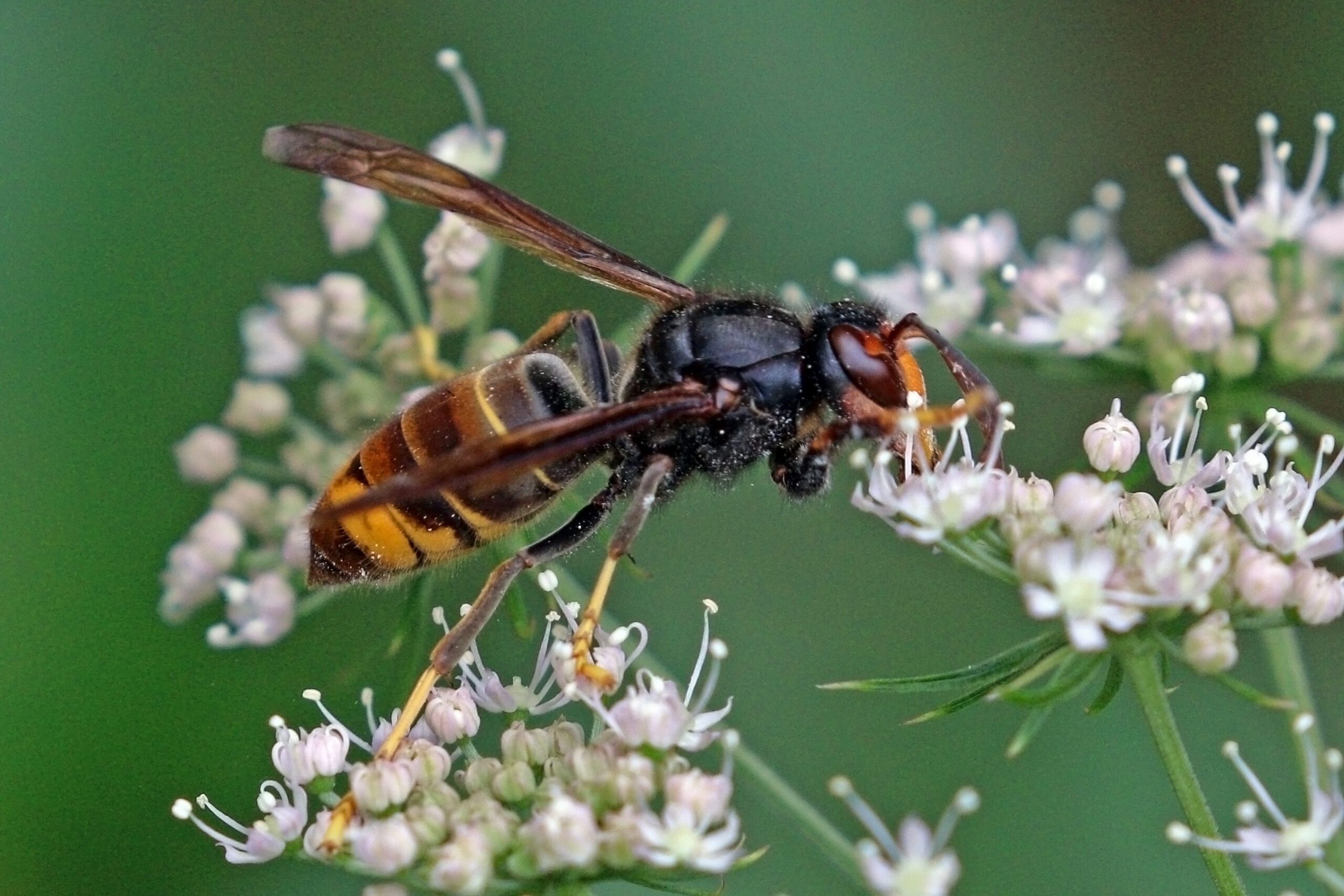 Figure 3. Asian Hornet (Vespa velutina). Credit: Charles J. Sharp (CC BY-SA 4.0).
Pesticide and chemical controls
The regulation of pesticides under the Plant Protection Products Regulations 2011 (SI 2011/2131) and related statutory instruments has profound indirect effects on insects. The restriction of neonicotinoid insecticides, following evidence of harm to pollinators, illustrates how agricultural law can shape insect populations. However, the framework prioritises human health and crop protection, with biodiversity often a secondary consideration. Emergency derogations granted for neonicotinoids on sugar beet in England in recent years highlight the fragility of these safeguards.
Environmental damage regulations
The Environmental Damage (Prevention and Remediation) (England) Regulations 2015 (SI 2015/810), and equivalents in Wales and Scotland, transpose the EU Environmental Liability Directive. They cover “protected species and habitats” and impose duties to prevent and remediate environmental damage. In theory, this could apply to insects listed under the WCA or Habitats Regulations. In practice, thresholds for action are high, and the legislation has rarely been used to protect insects. Where insects do benefit Despite the gaps, there are positive stories.
The Large Blue butterfly is a flagship example. After becoming extinct in Britain in 1979, it was reintroduced using populations from Sweden. Its listing under both the WCA and Habitats Regulations ensured targeted habitat management and research funding, leading to one of the most successful insect conservation programmes in Europe (Thomas et al., 2009). Another success is the legal protection of the native honey bee population on Colonsay, demonstrating how devolved powers can be used innovatively. Similarly, the inclusion of numerous insects on Section 41/7 and SBL lists has at least raised awareness and provided a basis for conservation funding.
Invasive species law has also mobilised public action against the Asian Hornet, with citizen science reporting networks established across Britain. These examples show that law can make a tangible difference when insects are explicitly recognised. Where gaps remain The gaps in legal protection for insects are nonetheless stark, and they fall into several recurring themes.
Coverage
The most fundamental shortcoming is that only a minute fraction of Britain’s insect diversity is directly protected in law. Fewer than 80 species are listed on Schedule 5 of the Wildlife and Countryside Act 1981, out of an estimated 24,000 terrestrial insect species in the UK (JNCC, 2022). This represents less than 0.4% of the total fauna. Even when other instruments such as the Habitats Regulations are considered, the proportion barely rises. By comparison, almost all bat species, all cetaceans, and every native amphibian and reptile species enjoy statutory protection. This imbalance reflects a historical bias towards vertebrates as conservation ‘flagships’, leaving the majority of invertebrates invisible to statutory frameworks.
Duties
The biodiversity duties set out in the Natural Environment and Rural Communities Act 2006 (England and Wales) and the Nature Conservation (Scotland) Act 2004 are potentially powerful but weakly enforced. Public authorities are legally obliged to “have regard” to biodiversity, but the wording is vague and compliance is rarely monitored. Reports by the Environmental Audit Committee (2017) concluded that many local planning authorities are unaware of their duty or lack the resources to act on it. Consequently, insects listed as “priority species” under Section 41, Section 7, or the Scottish Biodiversity List often remain unsupported by practical measures.
Policy silence
Insects are largely absent from national policy frameworks and planning guidance. Documents such as the National Planning Policy Framework in England emphasise biodiversity more generally but make little or no mention of invertebrates. Guidance for ecological survey work often focuses on birds, bats, reptiles and Great Crested Newts – groups that have benefitted from strong statutory drivers. By contrast, few protocols exist for mandatory insect survey, even in high-value habitats such as ancient woodlands or heathlands. The silence at policy level cascades into silence in practice, with developers and consultants less likely to consider insect assemblages unless specifically required.
Survey requirements
A major practical gap is the absence of statutory survey triggers for most insects. Developers are routinely required to survey for bats or newts if habitats are suitable, but there is no equivalent legal hook for insects. Even species protected under the WCA or Habitats Regulations are rarely flagged unless specialist entomologists are engaged early. This results in under-recording, with populations potentially destroyed unknowingly during development. Without mandated surveys, the data deficit continues, reinforcing the perception that insects are rare or absent.
Metrics
The introduction of Biodiversity Net Gain (BNG) in England, under the Environment Act 2021, illustrates how insects can be sidelined by design. The statutory biodiversity metric assesses habitats based on “distinctiveness” and “condition”, yet undervalues critical features for invertebrates such as ephemeral pools, exposed sandy soils, flower-rich brownfield sites and deadwood habitats. These habitats are often assigned low scores because they appear degraded or transitional, even though they are hotspots for invertebrate diversity. As a result, BNG may incentivise replacement of insect-rich sites with more ‘tidy’ but ecologically poorer habitats, perpetuating losses under the guise of net gain.
Together, these shortcomings perpetuate a cycle of neglect. Insects are overlooked in law, which leads to weak policy guidance, which in turn leads to limited survey effort and inadequate data. The resulting invisibility is then used to justify their exclusion from policy and legal mechanisms, locking in a downward spiral that is difficult to reverse.
Comparative perspectives
Across England, Wales and Scotland there is notable variation in the number and strength of insect-relevant terrestrial ecology laws. Scotland achieves slightly higher coverage, supported by proactive measures such as specific protections for distinct honey bee populations and more robust biodiversity duty reporting. England, despite the scale and sophistication of its policy framework, performs relatively poorly because of its heavy reliance on habitat-based approaches and weak enforcement of biodiversity duties. Wales sits between the two, with ambitious legislative frameworks but comparatively limited delivery on the ground. Taken together, these contrasts show how devolution can enable innovation, while also creating risks of fragmentation and inconsistency in the overall regulatory landscape.
Implications for practice
For ecologists, planners and conservationists, these legal gaps have real consequences. Insect surveys are rarely mandated, so practitioners must advocate for them proactively. Biodiversity Net Gain offers opportunities to promote insect-friendly habitats, but success depends on challenging the undervaluation of early successional habitats and deadwood.
Engagement with policy processes is essential. Consultations on LNRS guidance, BNG metrics, and pollinator strategies provide avenues for entomologists to press for greater insect recognition. Public engagement is also powerful: charismatic insects such as bees, butterflies and dragonflies can galvanise support for broader invertebrate conservation.
Conclusion
Insects are vital to Britain’s ecosystems but remain marginal in its laws. The Wildlife and Countryside Act and Habitats Regulations protect only a few species. Biodiversity duties and Section 41/7/SBL lists include many more but lack enforceability. New mechanisms such as BNG and LNRS risk sidelining insects if metrics undervalue their habitats. At the same time, the proposed Planning and Infrastructure Bill signals further change to the planning system in England. Although it is not yet on the statute book, its emphasis on streamlining decisions and accelerating housing and infrastructure delivery could either entrench the current marginalisation of insects, if assessment of individual projects is weakened and there is heavy reliance on broad habitat metrics, or create new opportunities where any related nature restoration mechanisms give clear priority to habitats that support rich invertebrate assemblages. Its final form will be critical in determining whether future planning law narrows or widens the gap between ambition for biodiversity and the protection of real insect communities on the ground.
Examples such as the Large Blue reintroduction and Colonsay honey bee protection show that law can be transformative when insects are recognised. To address biodiversity decline meaningfully, insects must be brought from the periphery to the centre of policy. That requires stronger duties, better integration into planning frameworks, and recognition of insects as essential bioindicators.

Thank You for 50 Years
Reaching 50 years is a testament to the enduring value of Antenna and the strength of the RES community. Thank you to everyone who has contributed, subscribed, shared photography, written, illustrated or championed the magazine over the decades, and to you, our Members and Fellows, for continuing to support insect science and communication.
Antenna remains a unique space where science meets storytelling – and we’re excited to share the next chapter with you.
Are you a RES Member or Fellow?
Log in to your membership account to request a hard copy of future volumes of Antenna, gain access to significant discounts on handbooks and registration to RES events, and many more exclusive benefits.
Not a Member or Fellow?
