Welfare & Ethics
On 3 June, the Royal Entomological Society and the UK Edible Insects Association (UKEIA) hosted a roundtable discussion in London to launch the development of new Codes of Practice for insect farming in the UK.
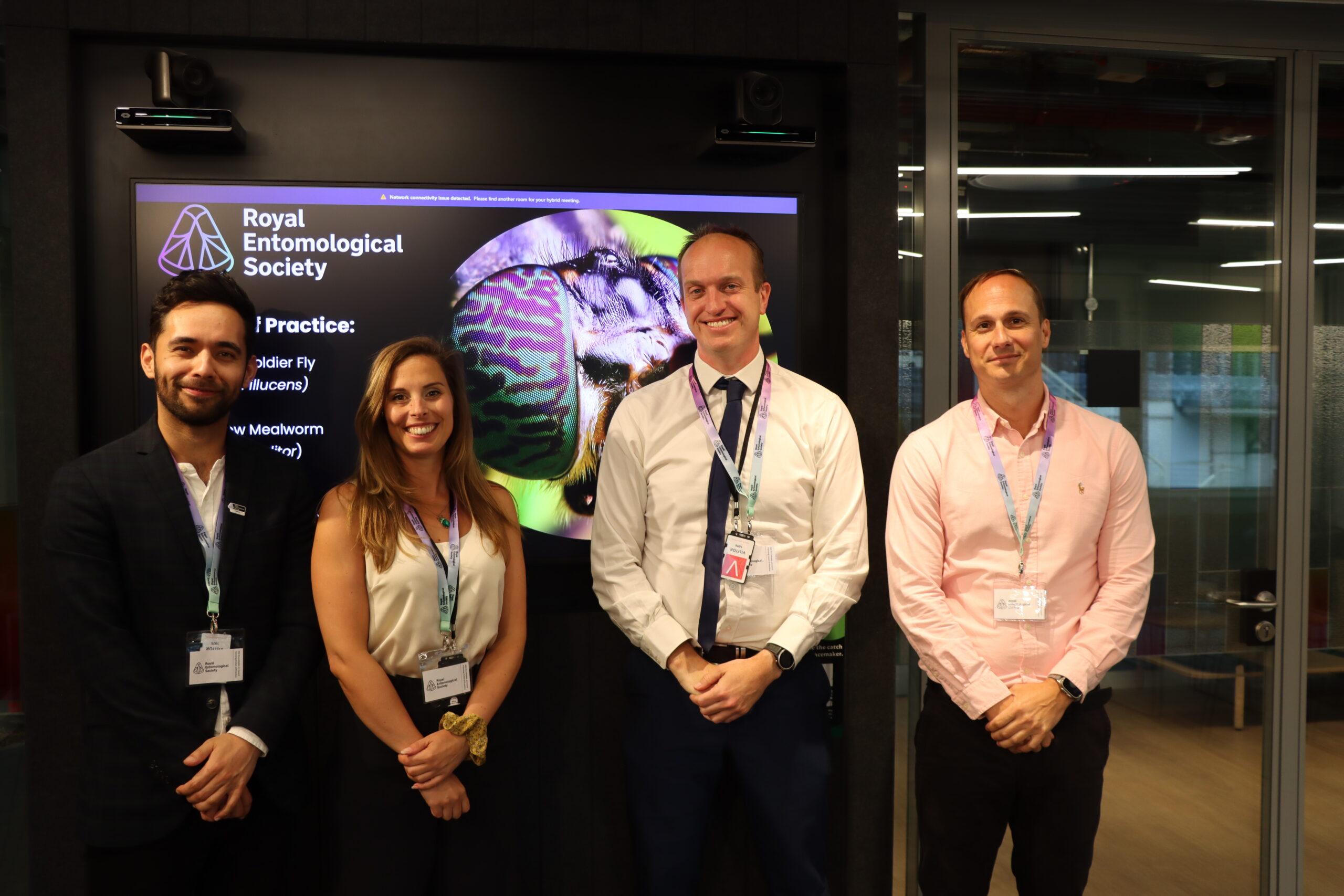 Left to right: Dr Geoff Knott FRES, Dr Jess Stokes FRES, Simon Ward, Adam Bensusan
Held at Lloyds Banking Group and attended by representatives from industry, academia, veterinary medicine, policy and welfare organisations, the event provided an opportunity to discuss both the draft Codes and the wider opportunities and challenges facing this rapidly developing sector.
The Codes of Practice are being developed for three species currently authorised for use in the UK: the house cricket (Acheta domesticus), yellow mealworm (Tenebrio molitor) and black soldier fly (Hermetia illucens).
Designed as practical, voluntary guidance, the Codes aim to support responsible and efficient production while remaining adaptable as scientific knowledge, technology and commercial practices continue to evolve.
After a morning introducing the sector, the wider legislative context and the Codes themselves, the afternoon focused on facilitated discussions around three key themes:
- credibility, trust and public confidence;
- practical farming and operational challenges;
- and regulatory readiness and future growth.
Conversations highlighted a wide range of topics, including consumer perceptions of insect farming, accreditation and assurance schemes, feed availability, welfare and performance monitoring, and the regulatory frameworks that will shape the sector’s future development.
The event demonstrated the value of bringing together expertise from across disciplines to discuss an area where entomology, food systems, sustainability, animal welfare and policy increasingly intersect.
It also reinforced the important role that scientific organisations such as the RES can play in supporting evidence-based discussions around emerging industries involving insects.
Insights from the roundtable will help inform the next phase of development of the Codes of Practice, with further consultation and stakeholder engagement planned as the project progresses.
Help promote our message
Support doesn’t need to be in the form of a monetary donation – share your support by spreading the word.
