The Royal Entomological Society Conservation Team is currently in Denmark, continuing vital work to understand insect populations and biodiversity in these areas.
This week has seen the team retrieve and download temperature data loggers from three key monitoring sites – part of ongoing research to assess habitat conditions and long-term insect population trends. The data collected will help us to understand the impact of extreme weather events and help us to mitigate the negative effects of a changing climate.
Alongside fieldwork, the team held a full-day meeting with Danish colleagues, strengthening collaboration on cross-border research projects, and engaged with UK partners focused on insect conservation and species recovery.
These efforts and partnerships – including projects like the EU-funded ‘LIFE ORCHIDS’ initiative and monitoring the endangered Large Blue butterfly – reflect the Society’s commitment to working with scientists, conservationists, and policymakers to safeguard insect biodiversity, combining scientific research and collaborative partnerships across borders.
About the RES Conservation Team
The Royal Entomological Society’s Conservation Team leads the Society’s ecological research and applied conservation work, driving efforts to protect and restore insect populations across the UK and beyond.
Working collaboratively with universities, government agencies, land managers, and conservation organisations, the team use their expertise to advise and translate entomological research into practical, evidence-based solutions and real-world outcomes – helping to restore ecosystems, protect threatened species, and inspire public engagement with insect conservation, with projects focusing on habitat monitoring, species recovery, and the development of sustainable conservation practices that support both insects and the ecosystems they sustain.
Through this work, the team helps to restore ecosystems, protect threatened species, and inspire public engagement with the importance of insect conservation – ensuring a healthier, more resilient natural world for the future.
“Our work in Denmark is enabling us to collaborate with like-minded scientists and conservationists on some amazingly beautiful and wildlife-rich sites. In the region of Møns, we are working to help save the very last Danish Large blue population and to identify potential new sites where, with the correct management, the butterfly can be introduced in the future.
This is a fantastic opportunity to apply lessons from our work in the UK and to learn from our European colleagues.”
– David Simcox, RES Conservation Manager
“It’s inspiring to see how shared commitment across borders can drive meaningful change. By connecting data-driven research with the passion of people working together on the ground, we can deliver meaningful outcomes for insect conservation.
Collaboration is key to tackling the challenges ahead for insects and the ecosystems we all depend on.”
– Sarah Meredith, RES Conservation Project Officer
Get Involved: Support, Partner and Collaborate with us
The Royal Entomological Society welcomes partnerships and collaborations with organisations, research institutions, and funders who share our vision for a thriving natural world. Together, we can develop impactful projects that advance insect science and conservation.
To explore partnership opportunities, please contact Anne Weinhold, RES Head of Development and Projects, at anne@royensoc.co.uk.
The RES’s projects are supported through our partnerships, scientific journals, membership contributions and donations,, all of which help sustain critical research, field monitoring, and education initiatives.
You can support the Society’s conservation work by donating today – Every contribution helps us continue vital projects that protect insects and the environments they depend on.
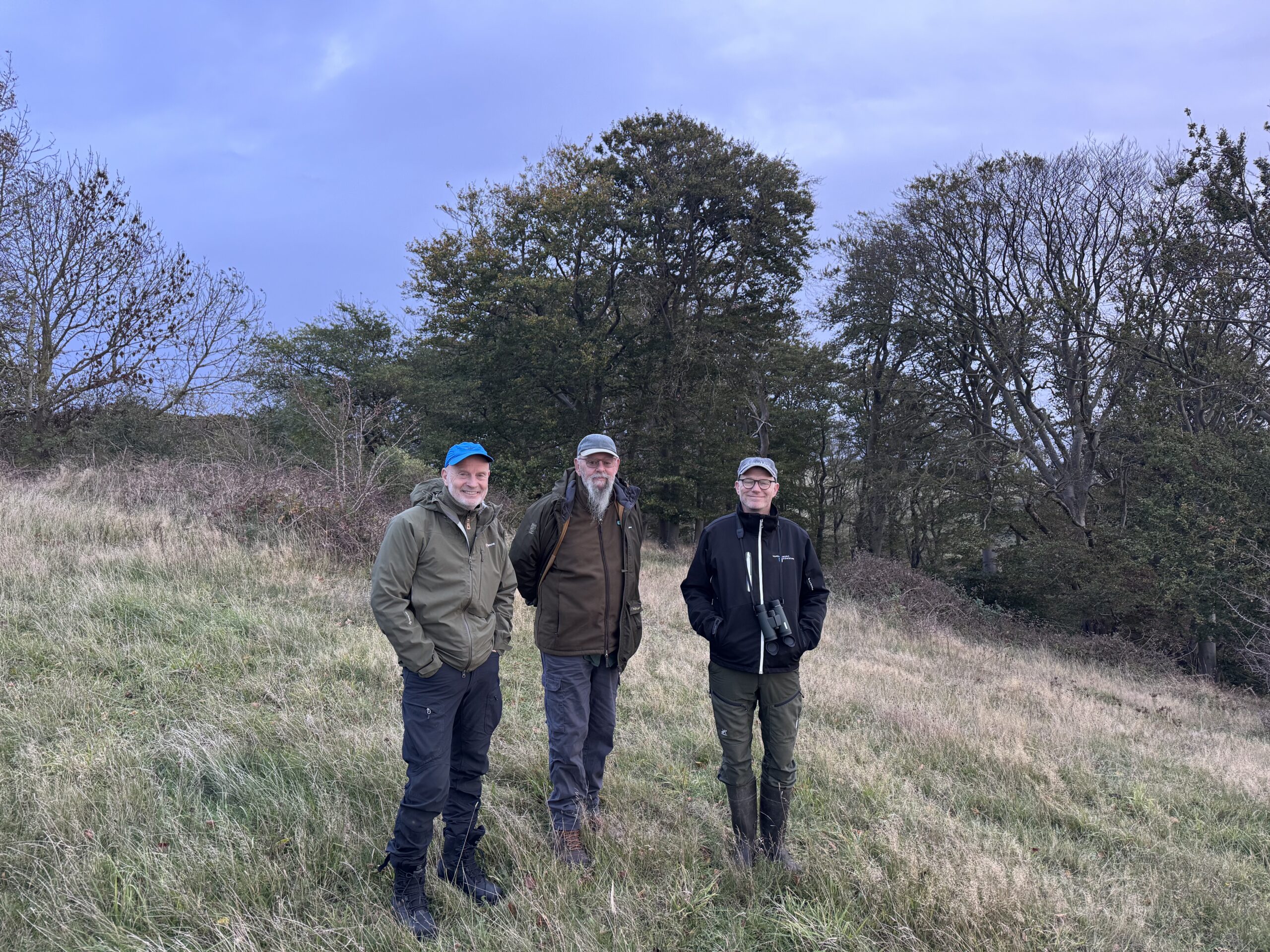 From the left: Peer Ravn (Ravn-Nature), David Simcox (RES) and Carsten Horup (Vordingborg Kommune) in Denmark – October 2025
