Congratulations to the winners of the 2025 Royal Entomological Society Journal Awards.
Agricultural and Forest Entomology is a Royal Entomological Society international journal with an audience of researchers, policymakers and professionals covering a wide range of topics, including research on insect pests, pollinators, and natural enemies in managed forests and agroecosystems. We welcome papers on biology, behavior, population dynamics, impact, and management of insects in various production systems.
Submissions on techniques for pest management, studies on insect communities, and the influence of management practices are encouraged.
Agricultural and Forest Entomology Winner
Camila Eunice Pereira Volff: The influence of geographical distance on the decay of beetle community similarity: Native habitat and agricultural monocultures. 27.2
Camila Eunice Pereira Volff is an ecologist dedicated to understanding how biodiversity persists in landscapes shaped by human activity.
Her work moves across the boundaries between forests and agricultural systems, where biodiversity, soil, and production intersect.
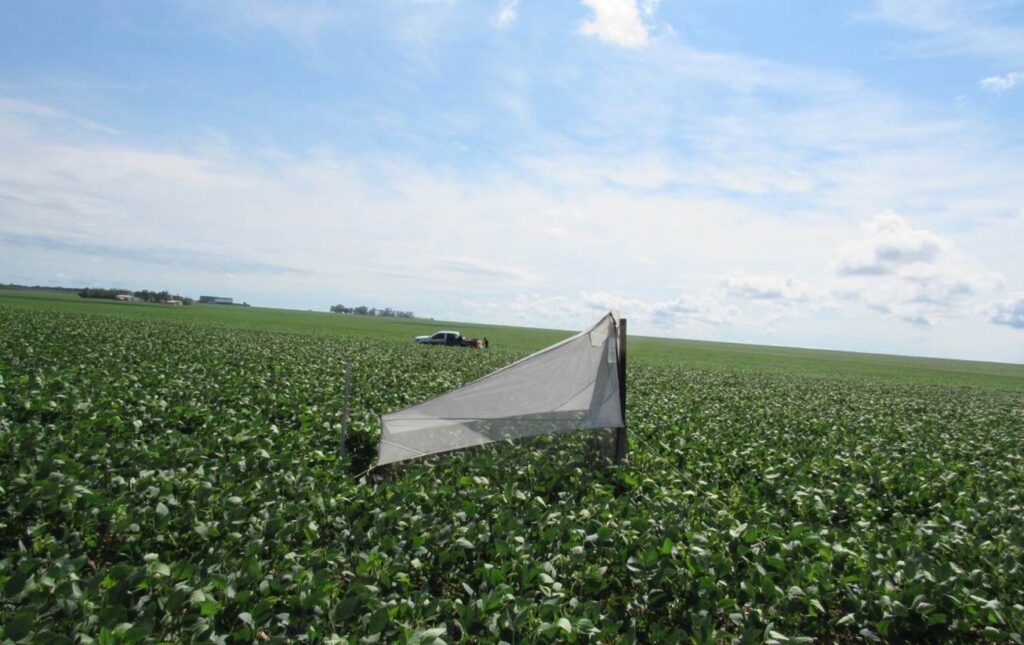 Photo Credit: BioAgroTeam
She holds a PhD in Ecology and Biodiversity Conservation from the Federal University of Mato Grosso, including a research period at the University of Bristol, and is currently a postdoctoral researcher in the CASPER project, in collaboration with the University of Exeter.
Her research investigates how spatial processes, native vegetation, and ecological interactions structure biological communities, particularly insects, in tropical landscapes. More recently, she has also explored how native trees influence soil fertility and carbon dynamics in silvopastoral systems.
“This study by Pereira Volff et al. is deserving of the Best Paper Award because it provides important, large-scale evidence that agricultural monocultures reduce beetle beta diversity by favouring a few generalist species, which are often insect pests. The research demonstrates that areas of farmland in Brazil that are left uncultivated for native vegetation, known as Legal Reserves, effectively support diverse beetle communities and enhance biodiversity. This extendive study highlights the importance of preserving native habitats within agricultural landscapes.”
– Judges’ comments
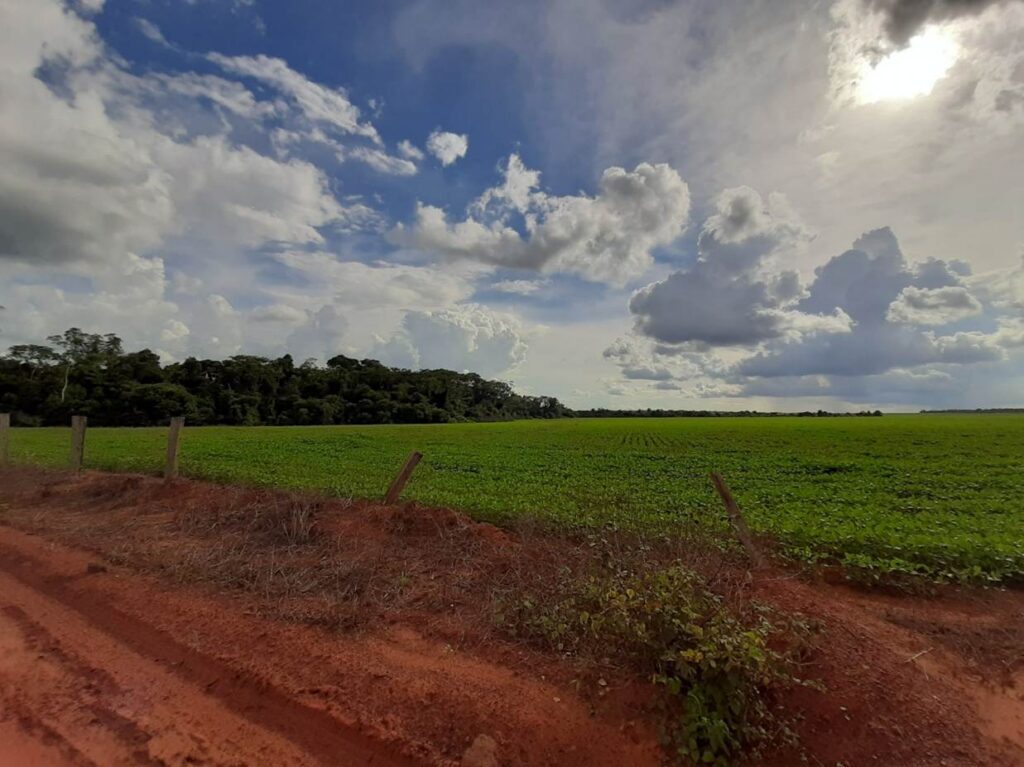 Photo Credit: BioAgroTeam
When natural habitats are replaced by large agricultural monocultures, insect communities become more similar in distant locations, losing their natural variation. In this study, Camila Eunice Pereira Volff and her co-authors show that beetle communities in soybean plantations remain similar even hundreds of kilometers apart, being dominated by a few widely distributed species, including agricultural pests.
In contrast, areas of native vegetation (Legal Reserves) maintain distinct communities even at short distances, preserving biodiversity and ecological differences in the landscape. These results demonstrate that the conservation of native vegetation is not only important at the local scale, but essential for maintaining ecological diversity and ecosystem functioning at larger scales.
By linking biodiversity, ecosystem functioning, and land use, her work seeks not only to understand these systems, but also to actively contribute to transforming how we produce and conserve, informing decisions that reconcile productivity, conservation, and long-term ecological stability.
