Data & bioinformatics

Published: 30 September 2026.
RES’ new journal, Approaches in Entomology, has published a review article that maps out seven steps to move automated insect monitoring from scattered proof-of-concept studies into robust, coordinated systems that balance emerging technologies and AI with human expertise. In the paper “Insect monitoring without pitfalls: Seven steps for robust insect sensing systems” the authors, Jamie Alison et al. drew on experience from a multidisciplinary team that pioneered automated monitoring for insects; they aim to focus development on sensor systems that actually serve ecological and conservation needs.
The prospects of novel technologies for insect monitoring are at once exciting and overwhelming. Sensors and AI are transforming the scale and frequency at which we can observe insects. But how much can we trust AI, and how do we make sure it doesn’t drown out valuable human expertise? The review is an essential roadmap to make sensible decisions about insect monitoring in an increasingly complex and technological world.
The review was born from the merging of two international expert networks spanning the EU and the USA. The ball really started rolling at the InsectAI writing retreat, which brought together 21 experts on a remote island off the coast of Norway. The setting allowed them to fully dedicate themselves to the paper, with rapid progress fuelled by open spaces and open conversation.

 The tiny island of the Mastein Fyr lighthouse, Norway, where the InsectAI writing retreat took place in 2024.
The subsequent editing process was a long journey, trying not only to summarise extensive knowledge across cameras, acoustics, radar, lidar and others, but also coming to an agreement between views that were not always aligned. It really was an exercise in democratic writing, with the lead team coordinating sub-section leaders, and everyone commenting on the whole manuscript at regular checkpoints.
When the time came to find an outlet for this paper, we were confronted with a publishing landscape that favours shorter, highly focussed publications rather than broad narrative reviews like ours. This is a poor fit for a nascent field like automated insect monitoring, where sharing progress and cross-pollination among early adopters across disciplines is crucial for success, as well as for converging onto shared standards and good practices.
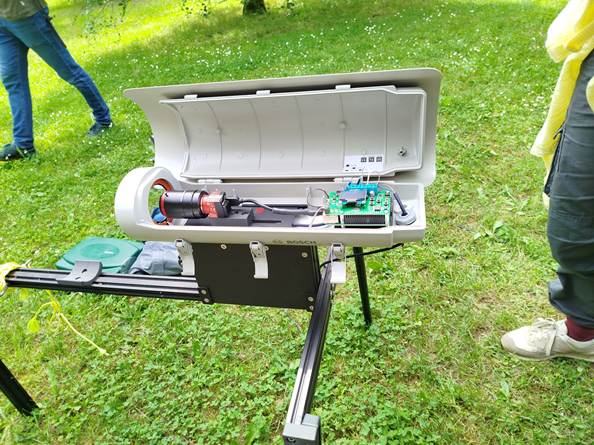
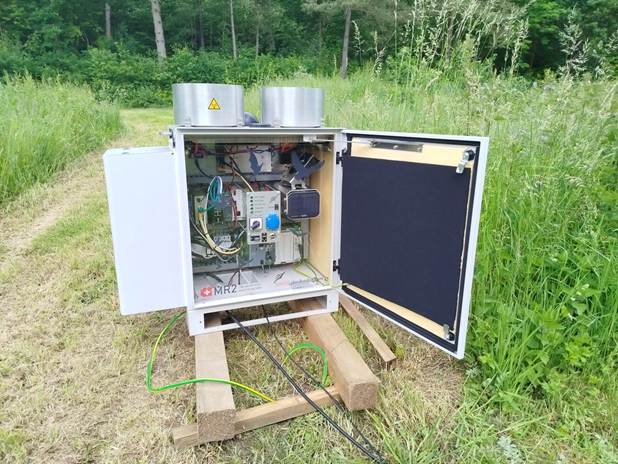 Example of some of the devices used to monitor insects: left, a moth camera; right, a vertical-looking radar. Credits: Jirislav Skuhrovec, InsectAI BionicBlitz 2026, Marburg (DE).
“Approaches in Entomology is the perfect home for this review. The fact that it is curated by the Royal Entomological Society gave us confidence in this new journal, because we believe that reputable scholarly societies have an important role to play in fostering open discussion about new directions in the field, while upholding high publication standards, offering a viable alternative to profit-driven publishing, as well as reinvesting in the community.” – Luca Pegoraro, co-author on the paper
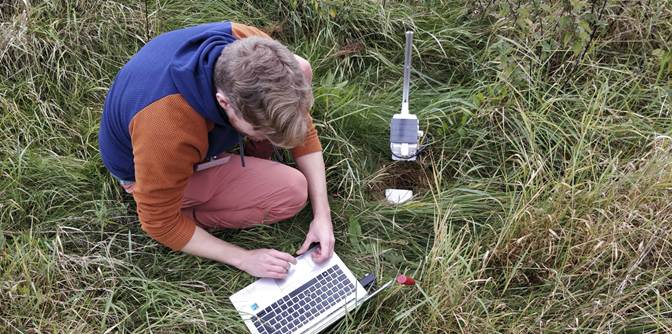
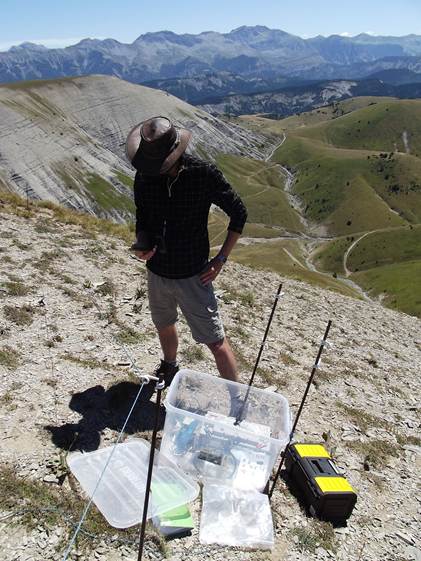 Monitoring tech doesn’t always behave… Lead authors Jamie Alison and Luca Pegoraro troubleshooting prototypes of automated insect monitoring systems in the field.
“Emerging technologies for insect monitoring have multiplied in recent years, and Approaches in Entomology will offer a vital landing place and editorial service for growing numbers of high-quality, high-impact research papers on this topic. We hope this review catalyses further work on shared standards, knowledge-sharing and equitable adoption of new tech in entomology, and, most of all, good discussions in the community.” – Luca Pegoraro, co-author on the paper
Want to be featured in our Journal Highlights?
Shine a spotlight on your research by submitting your papers to any of our seven journals for the chance to be mentioned on our news pages and social media
